Get It Fixed Fast - Leak-Free Guaranteed!
Commercial Roof Replacement Services in Chicago, IL

There is a point where patching a commercial roof costs more than replacing it, and most owners reach that point a season before they act on it. Illinois Premier Roofing PLLC removes and rebuilds flat and low-slope roof assemblies for warehouses, retail centers, industrial plants, and multi-tenant properties. We handle tear-off through final inspection on buildings in Chicago, Illinois, and the surrounding Chicagoland counties.
A replacement is only as good as whatever sits beneath the membrane. We inspect and repair decking, specify insulation and tapered drainage to current code, and detail every curb, drain, and perimeter before the new system is welded or adhered down. Three generations of trade knowledge and 17 years of commercial work inform each specification, and our licensed, bonded, and insured crews stay reachable 24/7 during construction. Send your project details through our contact page.
Commercial Roof Replacements We Manage
A replacement is only as good as the layers nobody sees, which is where our scope of work always begins.
Tear-Off, Disposal, and Site Protection
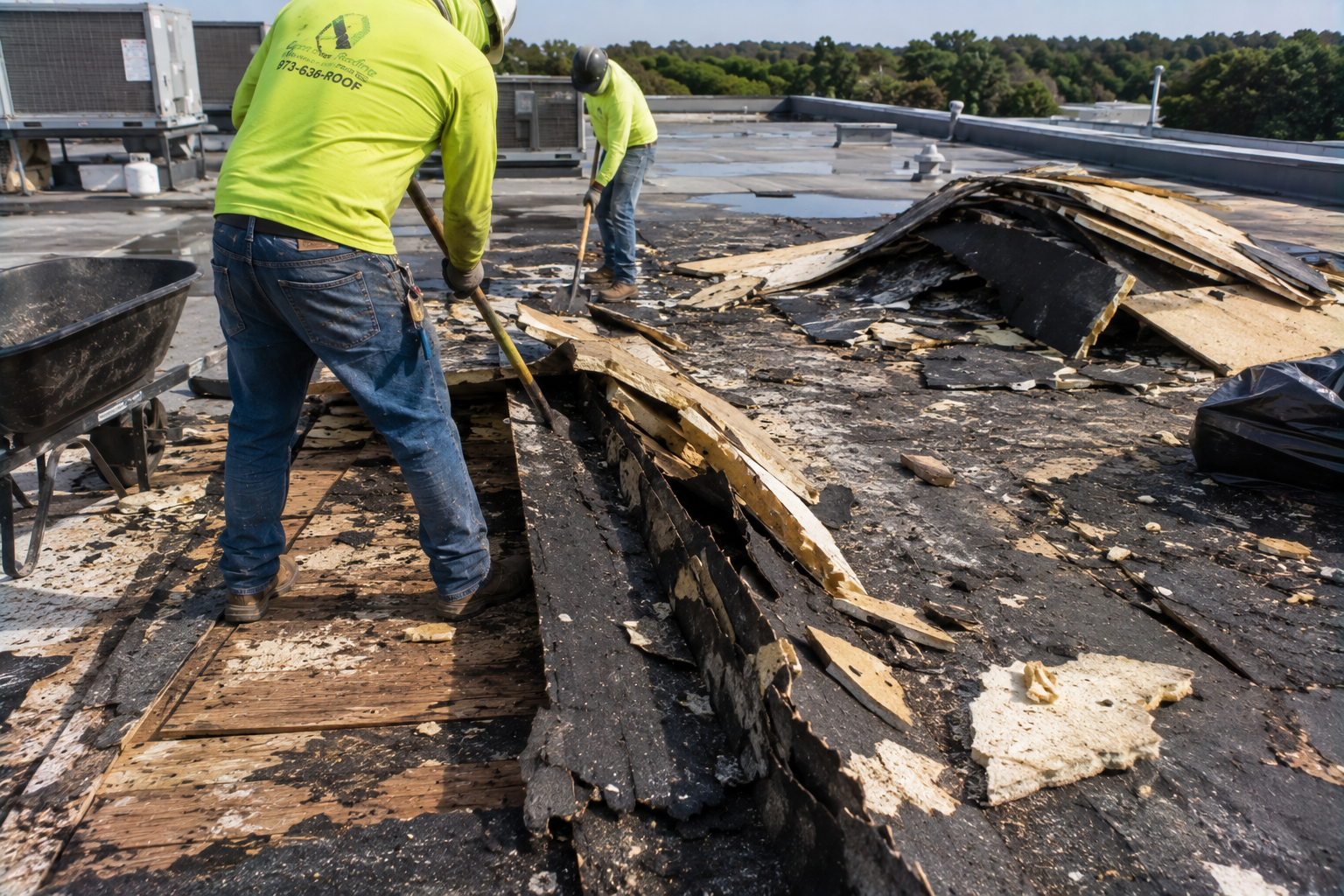
Removal is a logistics problem before it is a roofing one. We stage dumpsters and chutes away from loading traffic, protect landscaping and storefronts, sweep for fasteners daily, and open only as much roof as the crew can dry in before nightfall.
Structural Deck Repair and Replacement
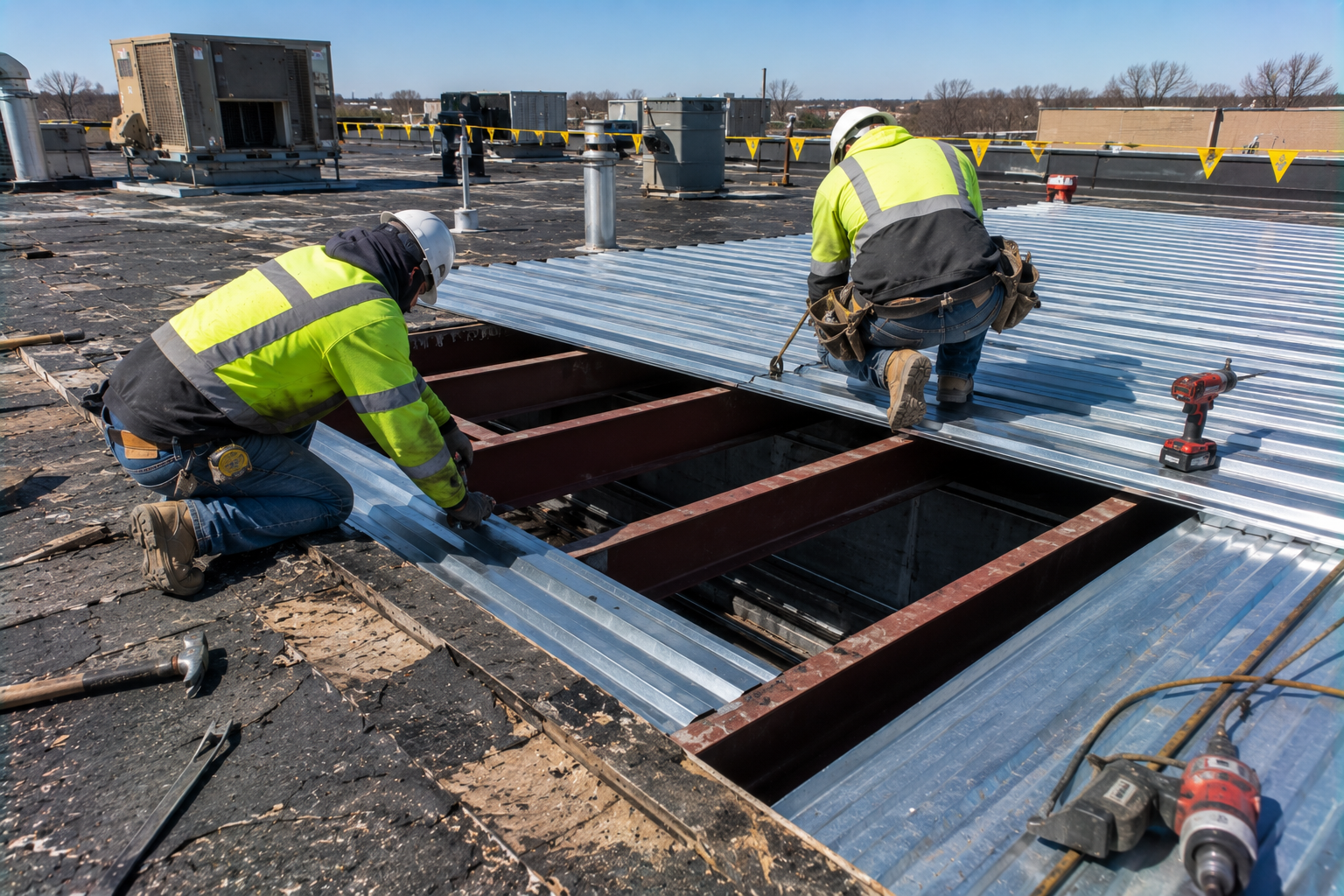
Once the old system is off, the deck tells the real story. Corroded steel flutes, delaminated wood panels, and spalled concrete get replaced or reinforced, and fastener pull tests confirm the substrate will hold the new attachment pattern.
TPO and PVC Single-Ply Systems
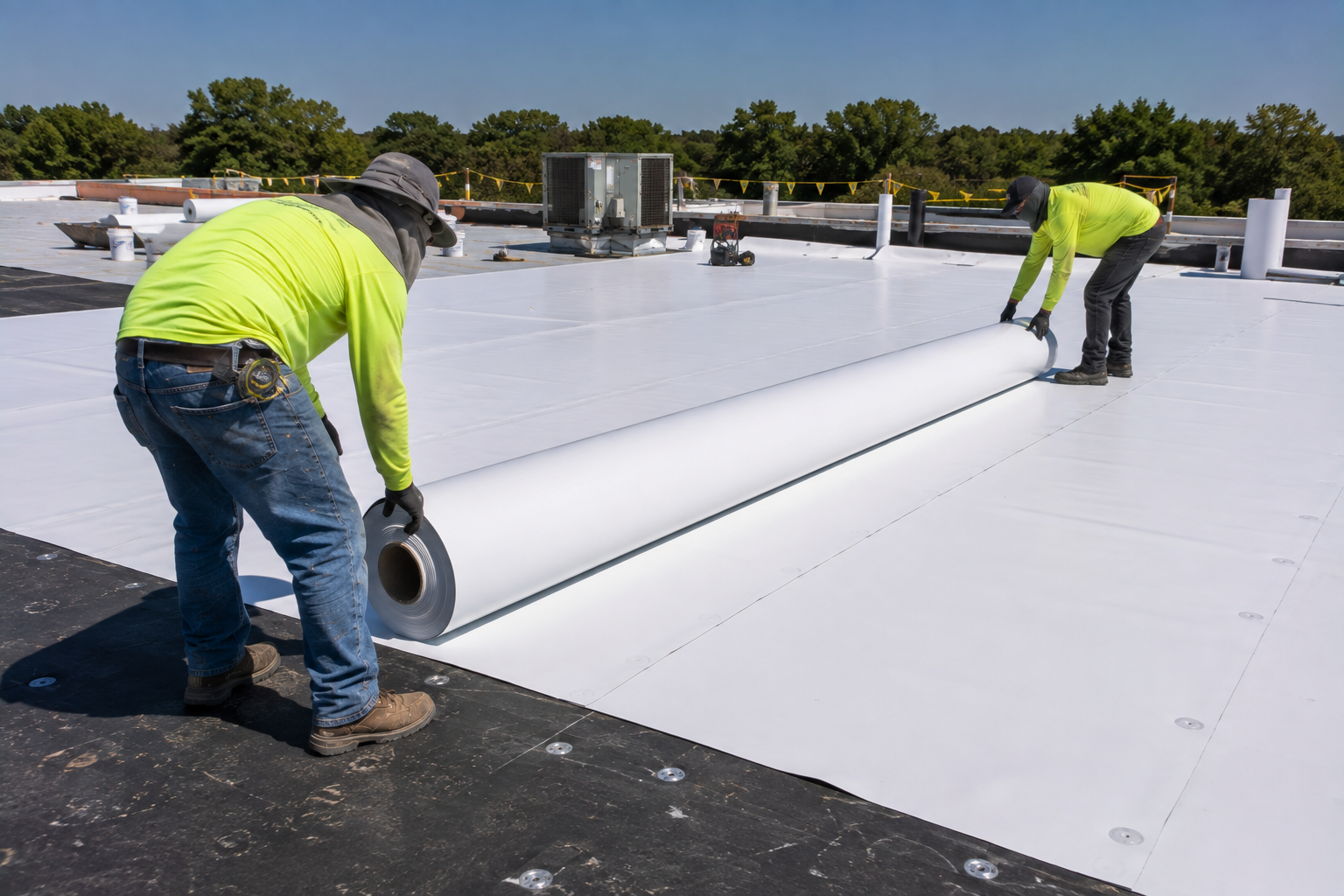
Heat-welded thermoplastic sheets create seams as strong as the membrane itself, which is why they dominate warehouse and retail work. PVC adds chemical resistance for restaurants and manufacturing, where grease and exhaust would degrade other materials over time.
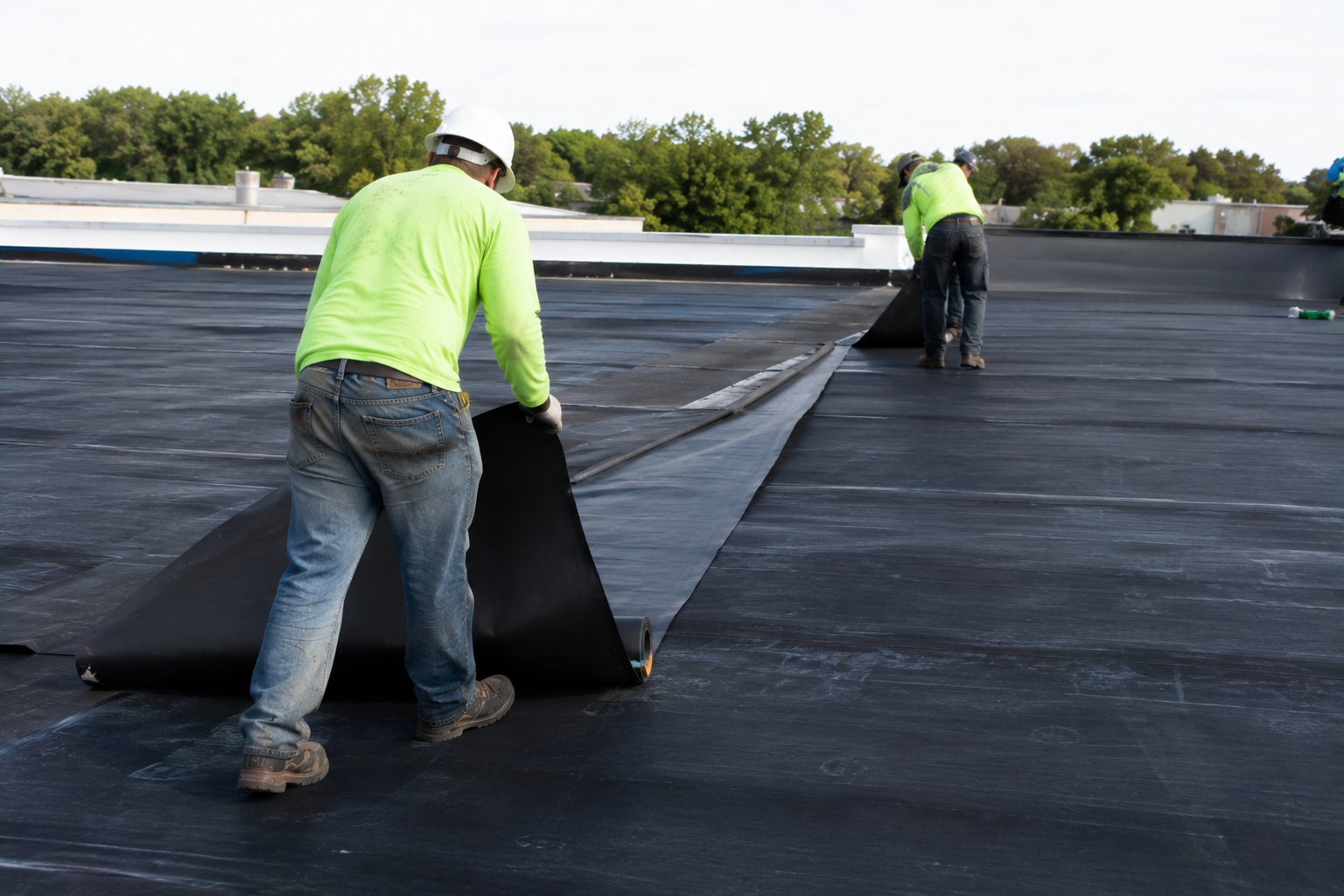
EPDM Rubber Roofing Systems
Rubber membranes flex through wide temperature swings without becoming brittle, an advantage on buildings that see hard freezes and summer heat. Available in ballasted, mechanically attached, and fully adhered configurations, they suit large fields with relatively few penetrations.
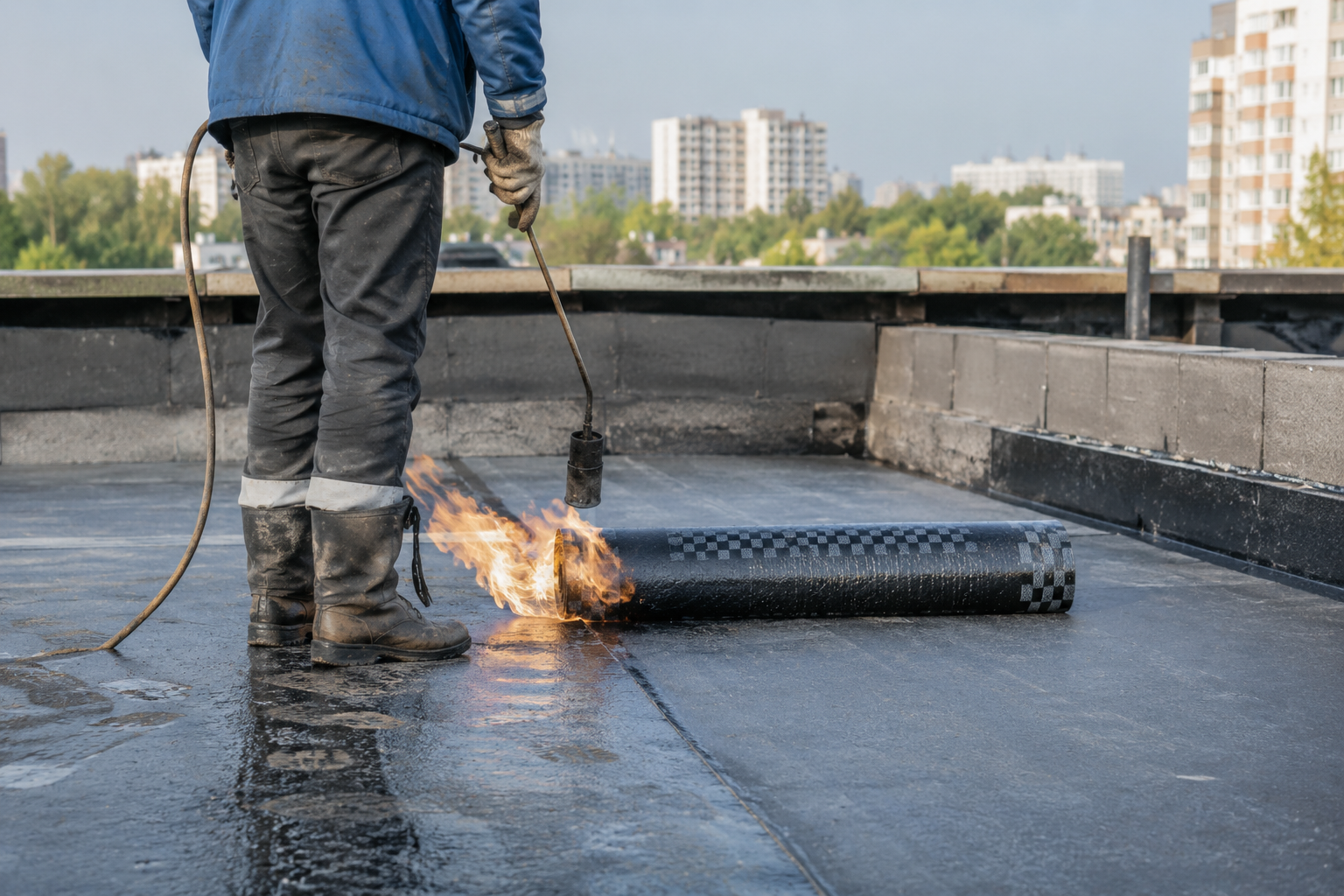
Modified Bitumen and Built-Up Roofing
Multi-ply asphalt systems deliver redundancy where foot traffic is heavy or rooftop equipment is serviced often. Torch, cold-adhered, and self-adhered applications let us match the method to occupancy, fire requirements, and whatever the building can tolerate during work hours.
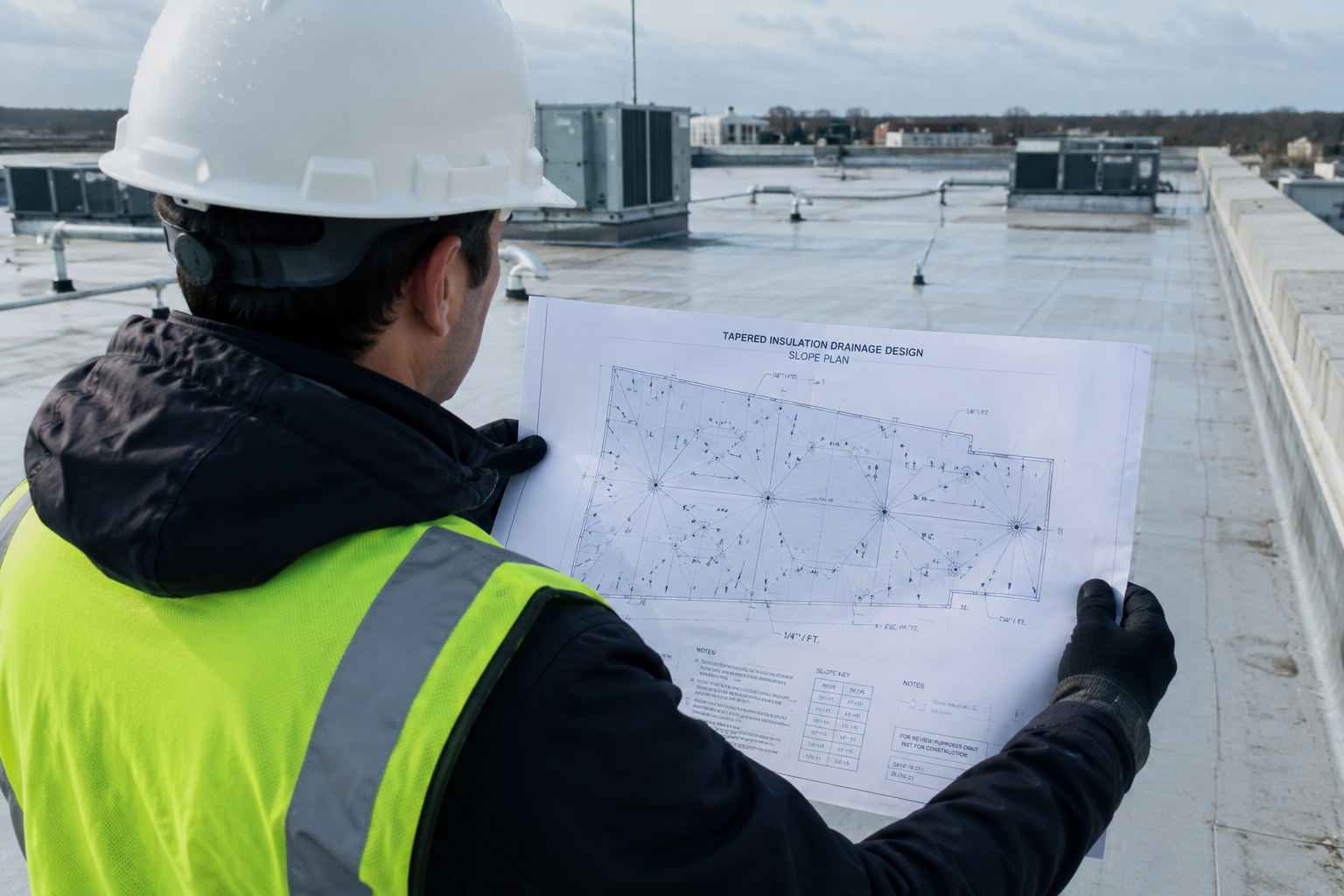
Tapered Insulation and Drainage Design
Replacement is the only moment a building gets its slope corrected properly. Our team lays out tapered polyiso, crickets, and saddles from a drainage plan, then sizes drains and overflow scuppers so water leaves within the timeframe code requires.
How Replacement Strengthens Long-Term Property Protection
Service Life You Can Actually Plan Around
You start a fresh service life with new insulation, new membrane, and corrected details rather than inheriting the last contractor's shortcuts. Everything above the deck is current, code-compliant, and installed as one engineered assembly instead of accumulated patchwork.
Drainage That Finally Works
Ponding disappears when the slope is designed rather than inherited from the original construction. Water reaches drains and scuppers on its own, the surface dries between storms, and the structural load of standing water stops accumulating over your building.
Warranty Coverage on Every Layer
Manufacturer coverage extends to the membrane, insulation, fasteners, and accessories as one system when everything comes from an approved assembly. A single warranty holder means no argument about which component failed if something ever goes wrong years down the road.
Phased Work That Fits Tenant Schedules
Sections get sequenced around leases, shipping windows, and production runs so the building keeps earning throughout. Night and weekend phases are available where daytime noise would be intolerable, and each phase closes watertight before the crew leaves for the day.
An End to Repeat Service Calls
Chronic leaks stop consuming your maintenance budget and your attention. Instead of tracking recurring stains, coordinating access, and explaining delays to tenants, you get a roof that simply performs, freeing staff time for work that actually moves the property forward.
Capacity for Equipment You Add Later
New decking, fresh insulation, and correctly specified attachment leave room for future rooftop units, solar arrays, or expanded mechanical loads. Adding capability later becomes a straightforward roofing project rather than a structural investigation with an uncertain and expensive answer.

WHAT OUR CLEINT SAYS...
See what our customers have to say about their experience with Illinois Premier Roofing PLLC. We take pride in delivering quality workmanship, reliable service, and roofing solutions that earn the trust of homeowners and businesses alike.
New Title
Replace Uncertainty With Dependable Roofing Performance
Every commercial roof eventually reaches the end of an honest working life, and the buildings that handle it well are the ones that plan the replacement instead of reacting to a ceiling collapse in February. Illinois Premier Roofing PLLC brings drawings, drainage calculations, and system options to that conversation for owners and property managers in Chicago, IL and throughout the Chicago area. There is no obligation attached to a specification review, and knowing what a replacement involves makes budgeting a great deal easier whether you move this year or next. Share your building details through our contact page and we will put a plan together.
FREQUENTLY ASKED QUESTIONS
How do we know a commercial roof needs replacement rather than repair?
Widespread saturation, deteriorated decking, brittle or shrinking membrane, and repairs that keep reappearing all point to replacement. Core samples and an infrared scan settle the question objectively, showing how much of the assembly still holds usable service life.
Which membrane suits a warehouse or industrial building best?
TPO covers most large-format buildings well, balancing reflectivity, weldability, and cost across wide uninterrupted fields. PVC becomes the better answer where kitchen grease or chemical exhaust is present, and EPDM handles heavy thermal movement on older structures.
What happens if the deck is damaged once the old roof comes off?
Damaged sections get documented, photographed, and priced as a unit rate agreed before work starts. That approach keeps deck repair from becoming a mid-project negotiation, since nobody can see the full condition until removal actually exposes it.
How is a replacement scheduled around tenants and operations?
Work proceeds in phases sized to what our crews can make watertight the same day. Illinois Premier Roofing PLLC coordinates access, deliveries, and noisy activity with property managers in Chicago, IL so tenants know exactly what happens each week.
What insulation is required under a new commercial roof today?
Current energy code sets minimum R-values well above what older buildings carry, generally met with layered polyiso and staggered joints. Replacement is when that gap gets closed, since the insulation is fully exposed and accessible only at this stage.
Can a flat roof be replaced during an Illinois winter?
Yes, with careful system selection and realistic scheduling. Mechanically attached single-ply and self-adhered modified bitumen install reliably in low temperatures, while fully adhered assemblies and hot asphalt need temperature windows that a cold-weather stretch cannot reliably provide.
How long will a building be under construction during replacement?
Timelines track square footage, deck condition, and phasing, with most projects running from two weeks to a couple of months. Illinois Premier Roofing PLLC issues a phase-by-phase schedule for properties in Chicago, IL before mobilizing any equipment.
What is included in the warranty on a new commercial roof?
Coverage typically spans material and workmanship for 15 to 30 years, including membrane, seams, flashings, and often insulation. Terms depend on system thickness and required maintenance, and the manufacturer inspects the finished roof before issuing the final certificate of coverage.