
Get It Fixed Fast - Leak-Free Guaranteed!
Mission-Critical Roofing Construction in Chicago, IL

Some buildings cannot go dark for a roof. A data hall, a surgical wing, or a cold storage facility keeps running while the work overhead proceeds, or the project has failed before it started. Illinois Premier Roofing PLLC plans and executes mission critical roofing construction for operations that must stay live, covering phasing, temporary protection, debris control, and safety across Chicago, Illinois, and the surrounding Chicagoland counties.
Our planning starts long before the first pallet lands on the deck. We sequence work around production schedules, shutdown windows, and infection control requirements, then hold daily coordination with facility staff so nothing overhead surprises anyone below. With 17 years in the field, three generations of trade knowledge, and licensed, bonded, and insured crews, we treat uptime as a deliverable rather than an aspiration. Send your project details and constraints through our contact page to start a phasing conversation.
Mission Critical Projects We Deliver
Keeping a facility running during roof work depends on planning every item below long before any crews mobilize on site.
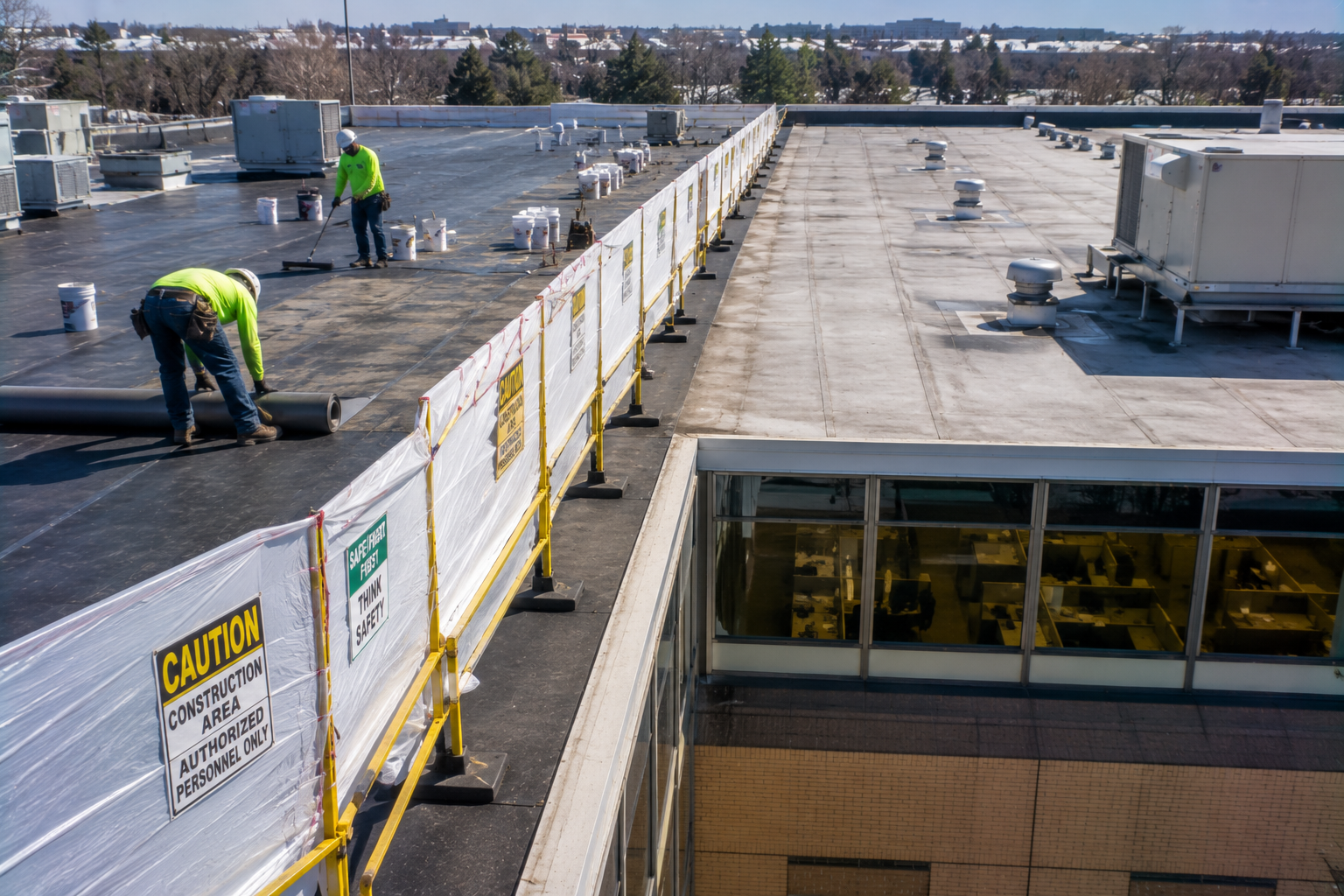
Phased Roof Replacement Over Live Operations
Sections come off and go back watertight the same day, never leaving open deck above occupied space. We divide the roof into work zones sized to a single shift, matching each phase to what the building can absorb operationally.
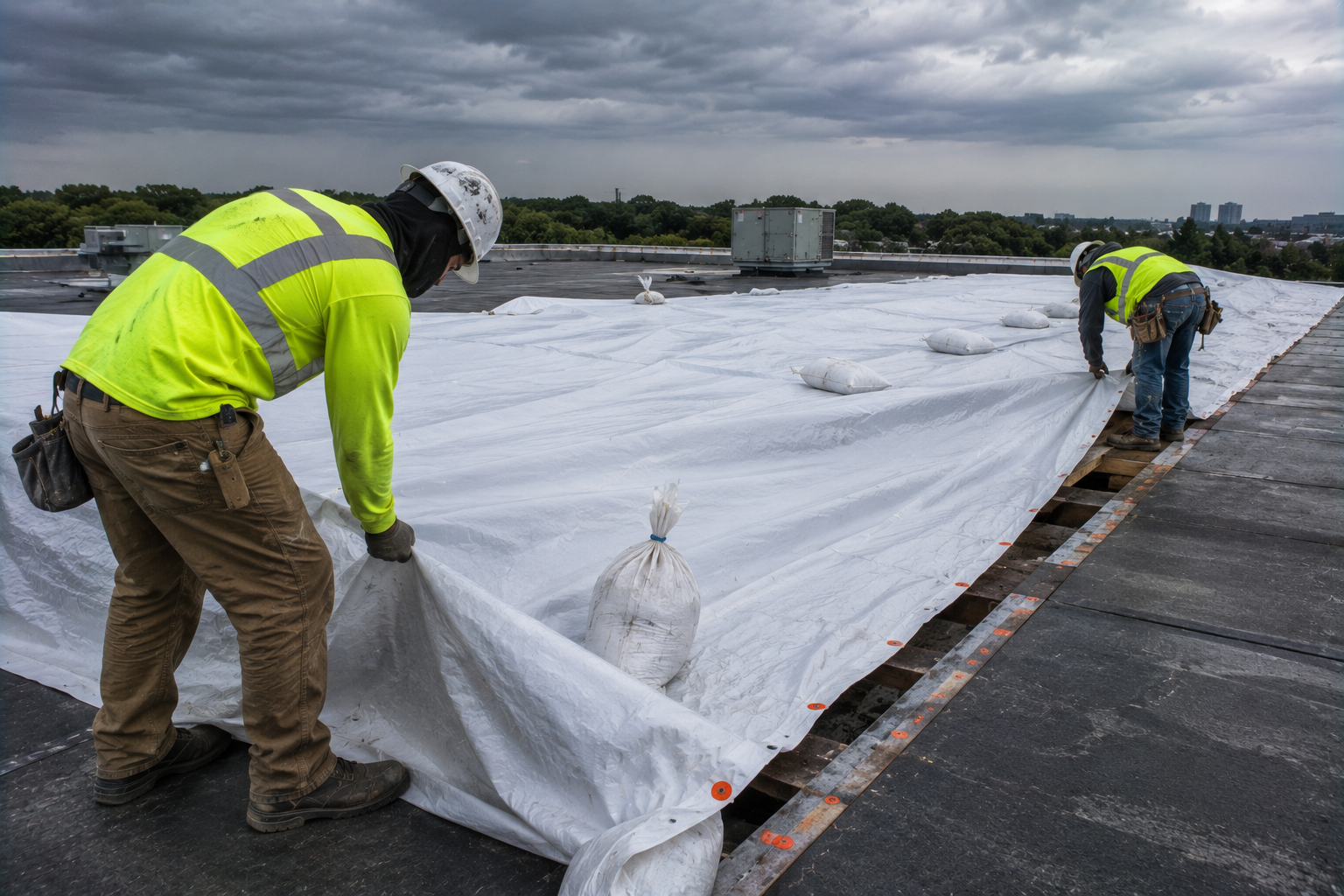
Temporary Weather Protection and Dry-In
Every open area gets a tie-in detail before crews leave for the night, not a tarp and optimism. Night watch procedures, monitored forecasts, and pre-staged materials mean a sudden storm meets a sealed edge instead of exposed insulation.
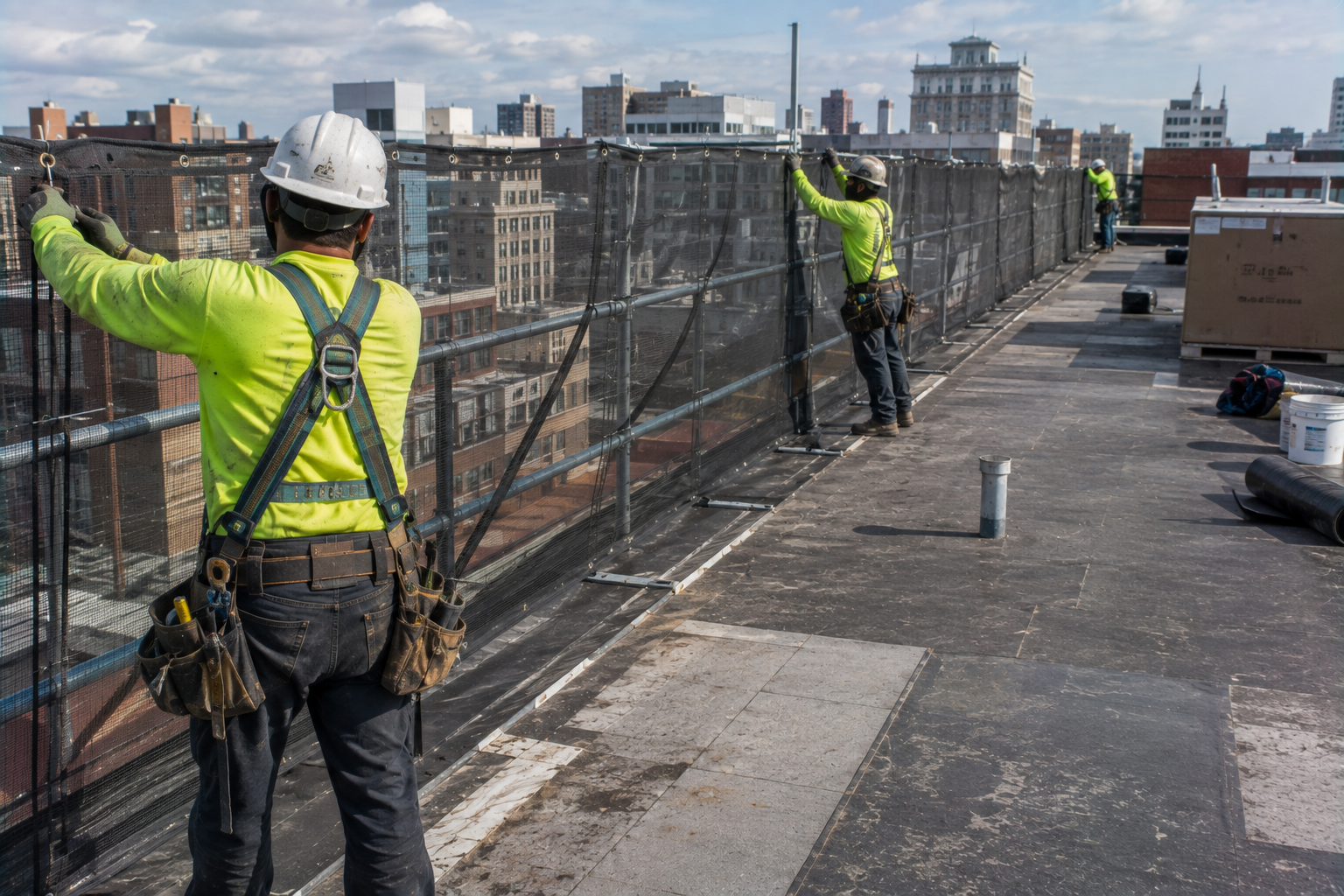
Containment and Debris Control
Tear-off waste travels in enclosed chutes to covered containers, and magnetic sweeps run at the end of every shift. Air intakes get sealed, louvers get filtered, and drive lanes stay clear so deliveries and ambulances keep moving normally.
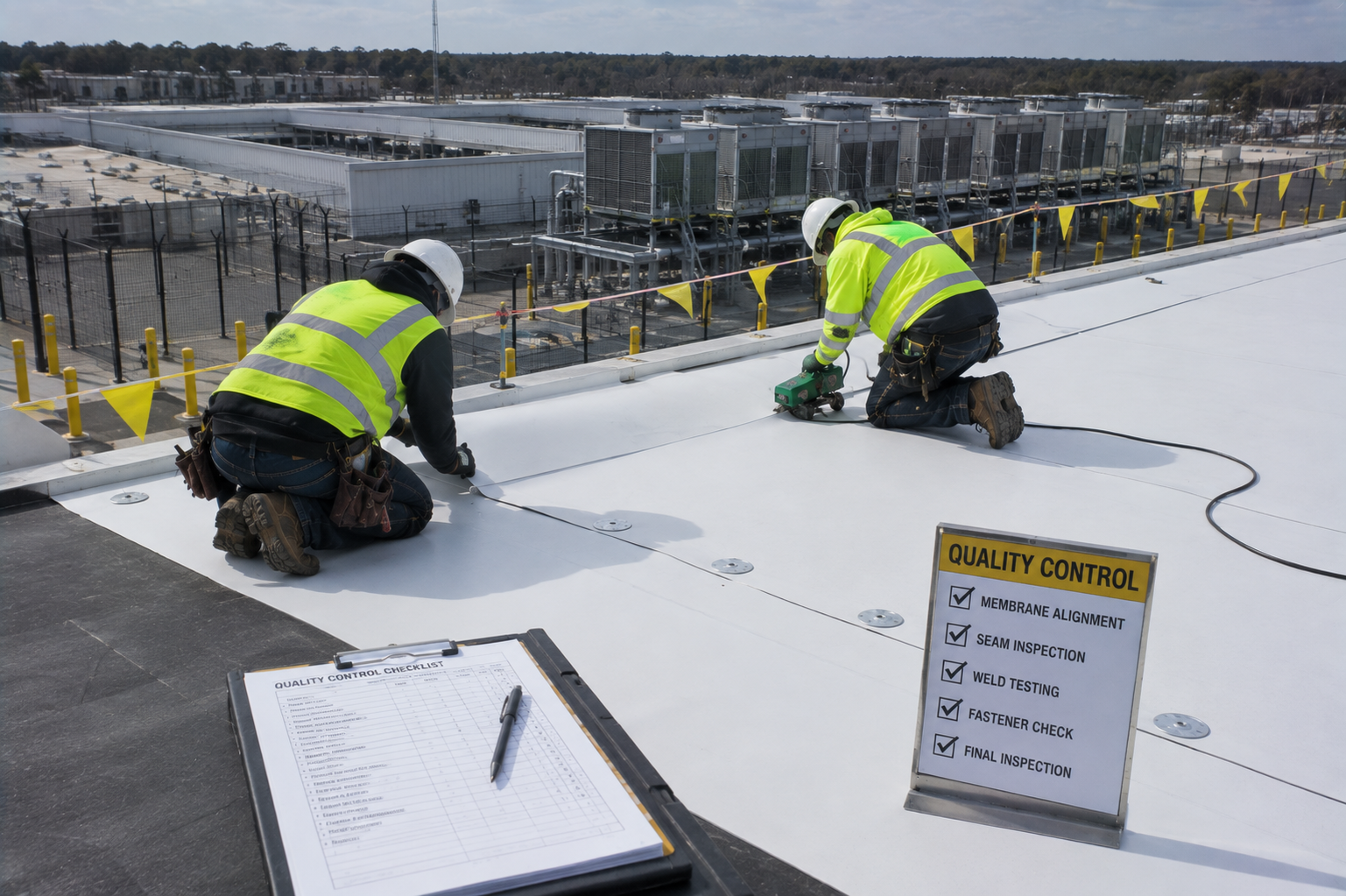
Data Center and Cleanroom Roofing
Vibration, dust, and static loads all matter above sensitive equipment. We coordinate anchor points with structural drawings, avoid percussive methods near raised floors, and schedule adhesive work so odors never reach intakes serving server halls, laboratory suites, or clean manufacturing space.
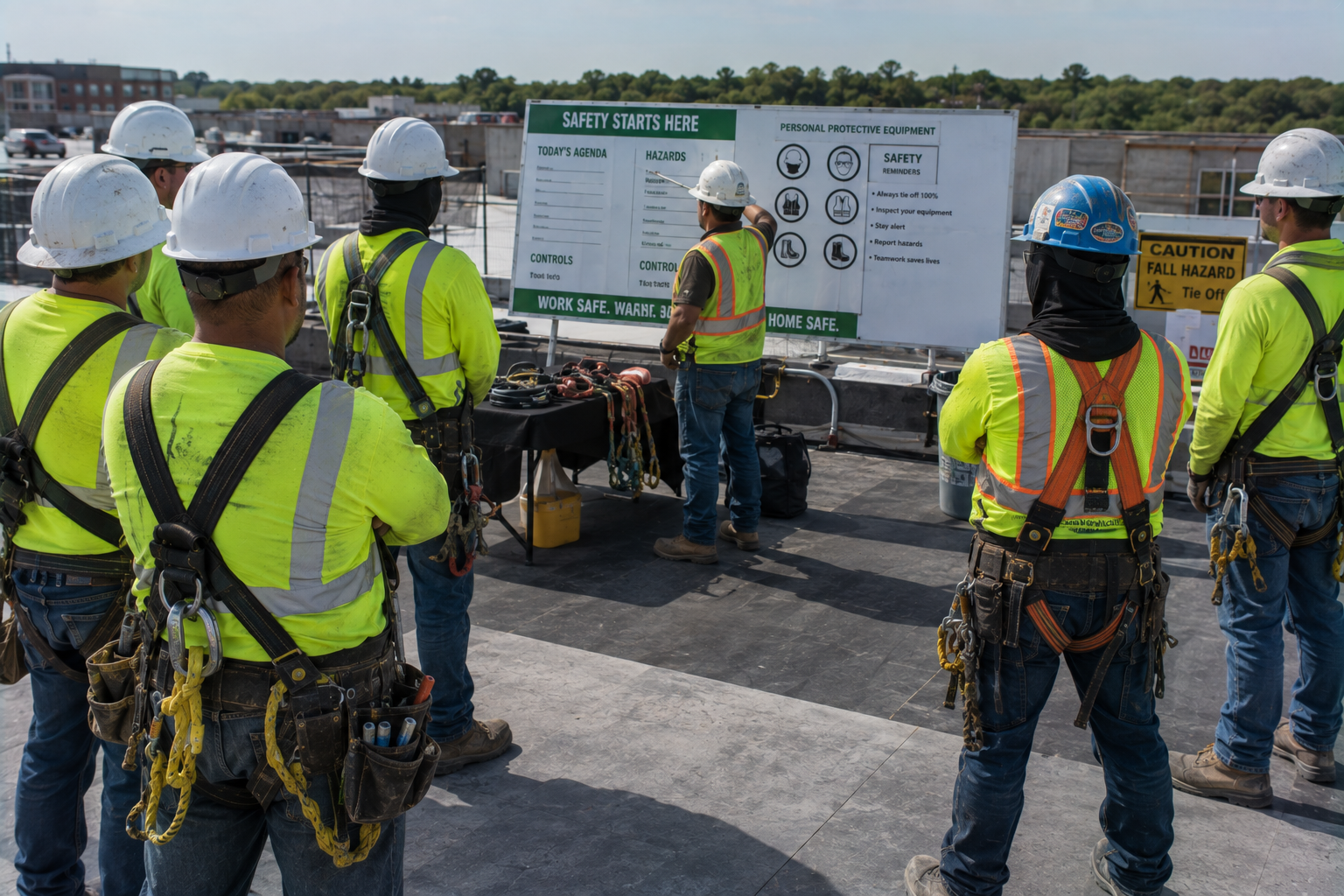
Site Safety and Access Planning
Written plans cover fall protection, hot work permits, crane picks, and hoisting paths before mobilization. We walk the route with facility security, agree on badging and escort rules, and keep public entrances separated from construction traffic throughout the project.
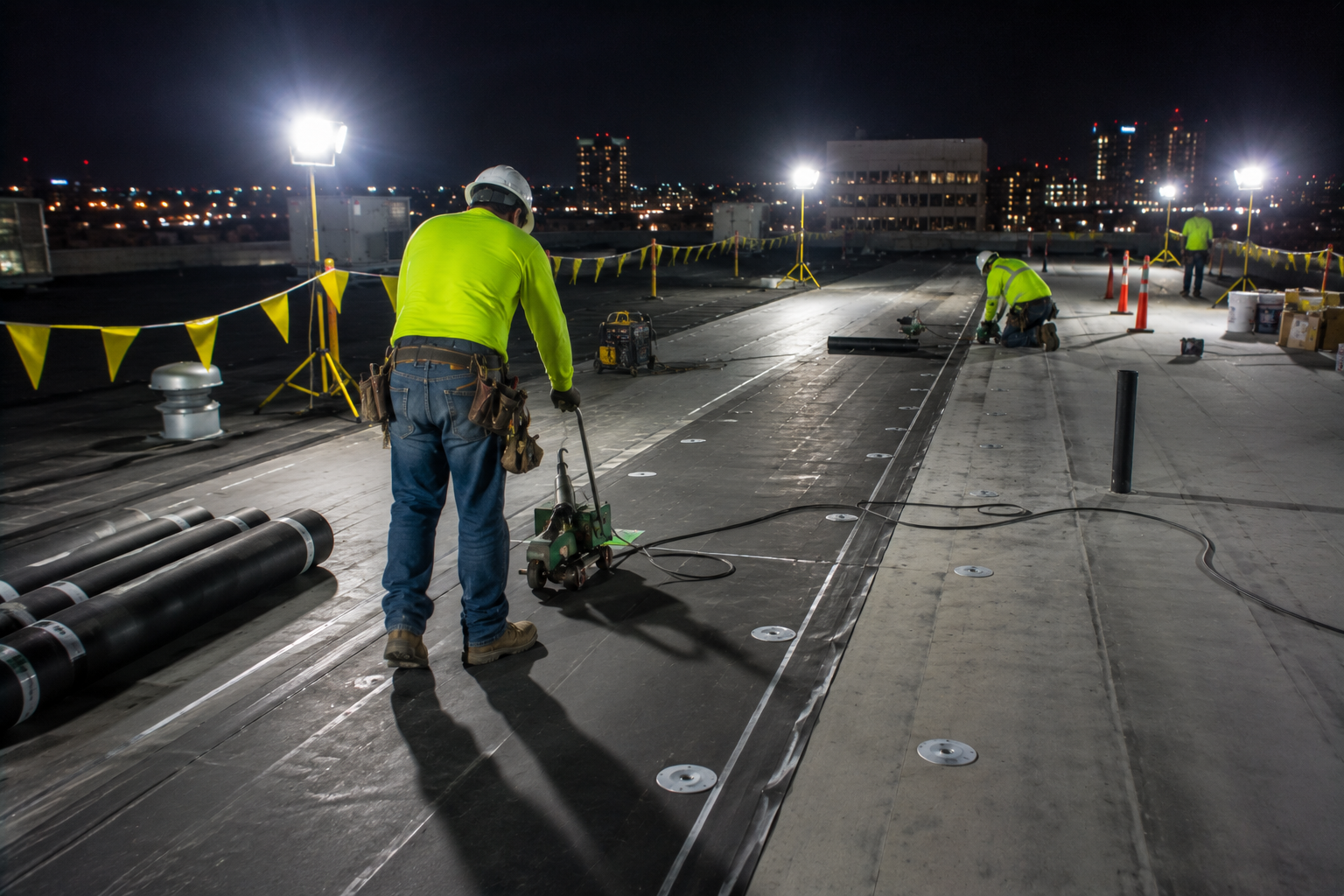
Shutdown Window and Off-Hours Scheduling
Some work only fits into a planned outage or a quiet third shift. Crews mobilize for narrow windows, hit defined milestones, and demobilize on time, because a facility that reopens late costs far more than the roofing scope itself.
How Careful Coordination Protects Essential Operations
Operations That Keep Running
You keep shipping, treating patients, or running batches while the roof above changes completely. Phasing absorbs the disruption instead of your production calendar, so revenue, patient throughput, and service commitments continue on their normal rhythm from start to finish.
Interiors That Stay Dry Through the Work
Dry-in discipline means no water reaches finished ceilings, servers, or product stored below. Each night ends with a sealed assembly, so an overnight downpour becomes a weather event rather than an insurance claim and a cleanup crew at sunrise.
A Schedule Your Facility Team Can Plan Around
Dates hold because the sequence was built with your constraints in it. Maintenance managers get zone maps, daily updates, and honest notice when weather shifts a phase, which keeps internal communication straightforward rather than a daily scramble for answers.
Clean Air and Clean Floors Below
Contamination control protects the parts of your operation that inspectors examine closely. Sealed intakes, filtered louvers, and swept lots keep particulates out of sterile areas and nails out of tires, which protects both your compliance record and site relationships.
Documentation That Survives an Audit
Photo logs, daily reports, and closeout packages arrive organized rather than assembled after the fact. When a regulator, insurer, or corporate reviewer asks what happened above a critical space, the answer already exists in writing with dates and photographs attached.
Round-the-Clock Response If Something Moves
Weather, equipment failures, and unforeseen deck conditions do not wait for business hours. Our 24/7 availability means a phased project has someone reachable at any hour, and a compromised area gets secured before it becomes an interior problem.
Uptime Is Part of the Scope
Lorem ipsum dolor sit amet, consectetur adipiscing elit. Duis enim lectus, condimentum nec nibh in, egestas ultricies dui. Sed consectetur ligula urna, ac luctus nisi mattis at. Phasellus aliquam lectus sit amet nisl pretium, ac tempus nisl condimentum.

WHAT OUR CLEINT SAYS...
See what our customers have to say about their experience with Illinois Premier Roofing PLLC. We take pride in delivering quality workmanship, reliable service, and roofing solutions that earn the trust of homeowners and businesses alike.
New Title
Uptime Is Part of the Scope
Roofing above a live facility is a logistics problem wearing a construction hat, and the crews who understand that difference are the ones worth vetting. Illinois Premier Roofing PLLC approaches mission critical work from Chicago, IL with the assumption that your operation outranks our schedule, which shapes every phase line, every dry-in decision, and every hour we choose to work. There is no urgency to commit to anything today. If a data hall, hospital wing, cold storage building, or production plant has a roof nearing the end of its service life, send the details through our contact page and we will walk the deck with you and map out what a workable sequence looks like.
FREQUENTLY ASKED QUESTIONS
How do you replace a roof above a facility that cannot shut down?
Phasing does the work. We break the roof into zones small enough to open, replace, and seal within one shift, then sequence those zones around production schedules, outage windows, and areas your operation can temporarily vacate without losing output.
What happens if a storm arrives while a section of roof is open?
Nothing gets left open. Each phase is dried in and watertight before crews leave, and we monitor radar continuously during work, pulling back and sealing early when a cell tracks toward the site rather than gambling on the forecast holding.
How is dust and debris kept out of sensitive equipment below?
Containment starts at the deck. Enclosed chutes, sealed rooftop intakes, filtered louvers, and negative pressure at penetrations keep particulates from migrating indoors, and interior protection goes up directly beneath any area where deck fasteners will be removed or disturbed.
Who coordinates with our facility staff during construction?
A single point of contact runs daily communication. Illinois Premier Roofing PLLC assigns a project lead who attends your morning huddles, publishes zone maps, and clears every access change with security, all coordinated from our Chicago, IL office.
Can roofing work be done during a planned shutdown window?
Yes, and those windows often produce the cleanest result. We pre-stage materials, add crew size for the duration, and build the scope backward from your reopening time so demobilization finishes before operations resume rather than overlapping with them.
What safety planning happens before crews arrive?
Fall protection, hot work permits, crane pick plans, and hoisting routes are documented and reviewed with your safety officer first. Badging, escort requirements, and separation of public entrances from construction traffic all get settled during preconstruction walks of the site.
How long does a phased roof replacement take compared with a conventional one?
Longer on the calendar, shorter on disruption. Phasing stretches overall duration because zones are smaller and each one gets dried in daily, but the building never closes, which is usually the trade that matters most to the people running the facility.
How do you decide whether a facility needs phased construction at all?
Risk tolerance decides it. Illinois Premier Roofing PLLC walks the building with your operations team from our base in Chicago, IL, identifying which spaces below can accept a short interruption and which cannot tolerate one at any point.