Get It Fixed Fast - Leak-Free Guaranteed!
Commercial Roof Inspection Services in Chicago, IL

How much of your roof have you actually seen in the last five years? Most owners learn about damage from a stain on a wall, long after water found its way in and started spreading. Illinois Premier Roofing PLLC performs commercial roof inspections, storm damage assessments, and insurance documentation for properties in Chicago, Illinois, and the surrounding Chicagoland counties. This page explains what our inspections examine, what the written report contains, and how those findings support a storm claim or a budget decision.
Our inspections rest on evidence rather than opinion. We photograph every finding, map moisture where it exists, and rank repairs by urgency so you can act on facts. Backed by 17 years of Chicagoland roofing and three generations of trade experience, our licensed, bonded, and insured team reports what the roof shows, even when nothing needs doing. Request an inspection through our contact page.
Commercial Roof Inspections We Perform
Our inspections look well past the surface, because the costliest roof problems usually begin somewhere a quick walkthrough never reaches.
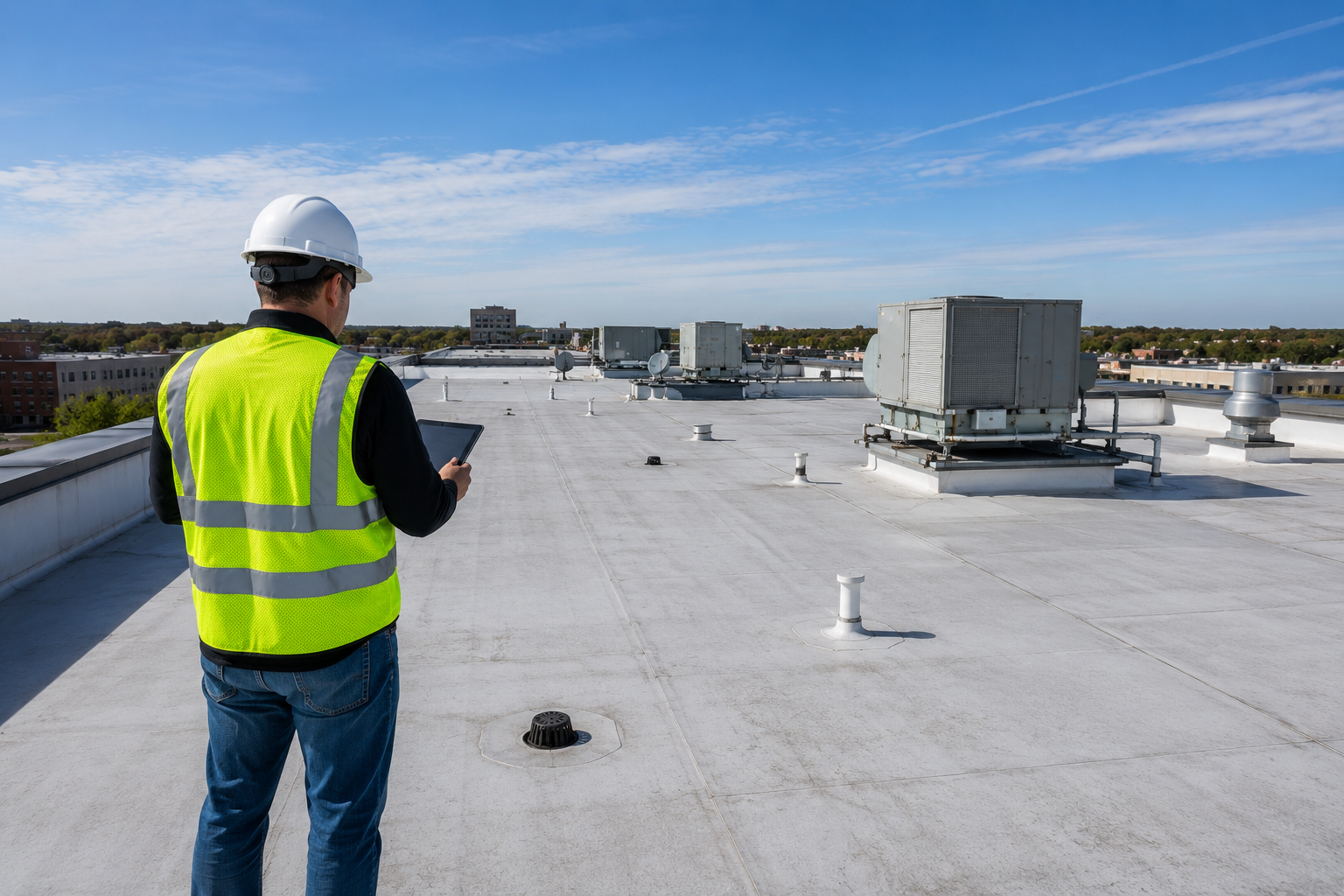
Comprehensive Roof Condition Surveys
A full survey covers the field, perimeter, penetrations, drainage, and interior evidence of past leaks. The result is a mapped report showing what is failing now, what is aging normally, and roughly how many seasons remain before replacement.
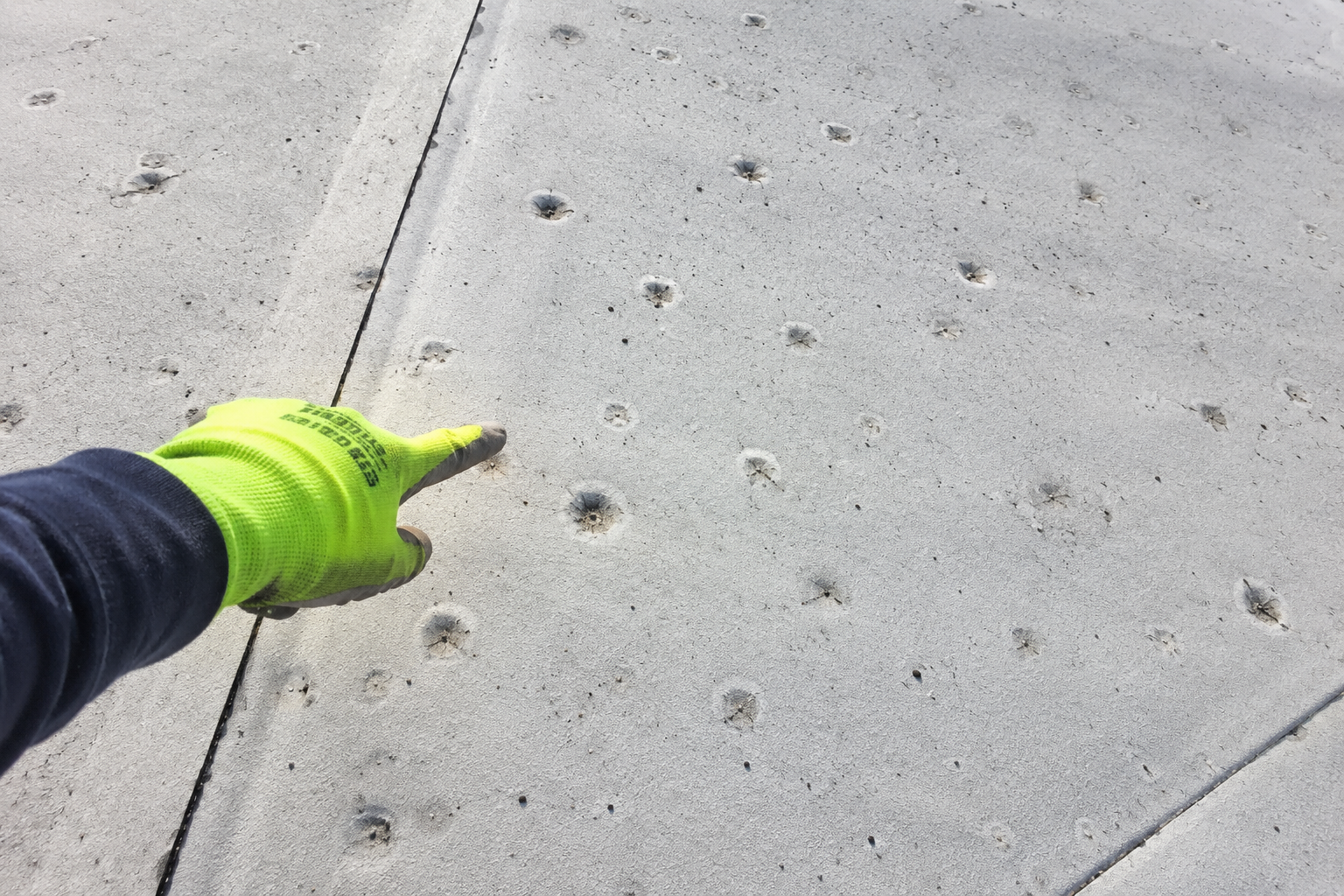
Post-Storm Wind and Hail Assessments
After severe weather, damage often stays invisible from the ground while the membrane above has been bruised or punctured. We test-square the surface, examine edge metal and rooftop units, and record impact patterns before the evidence weathers away.
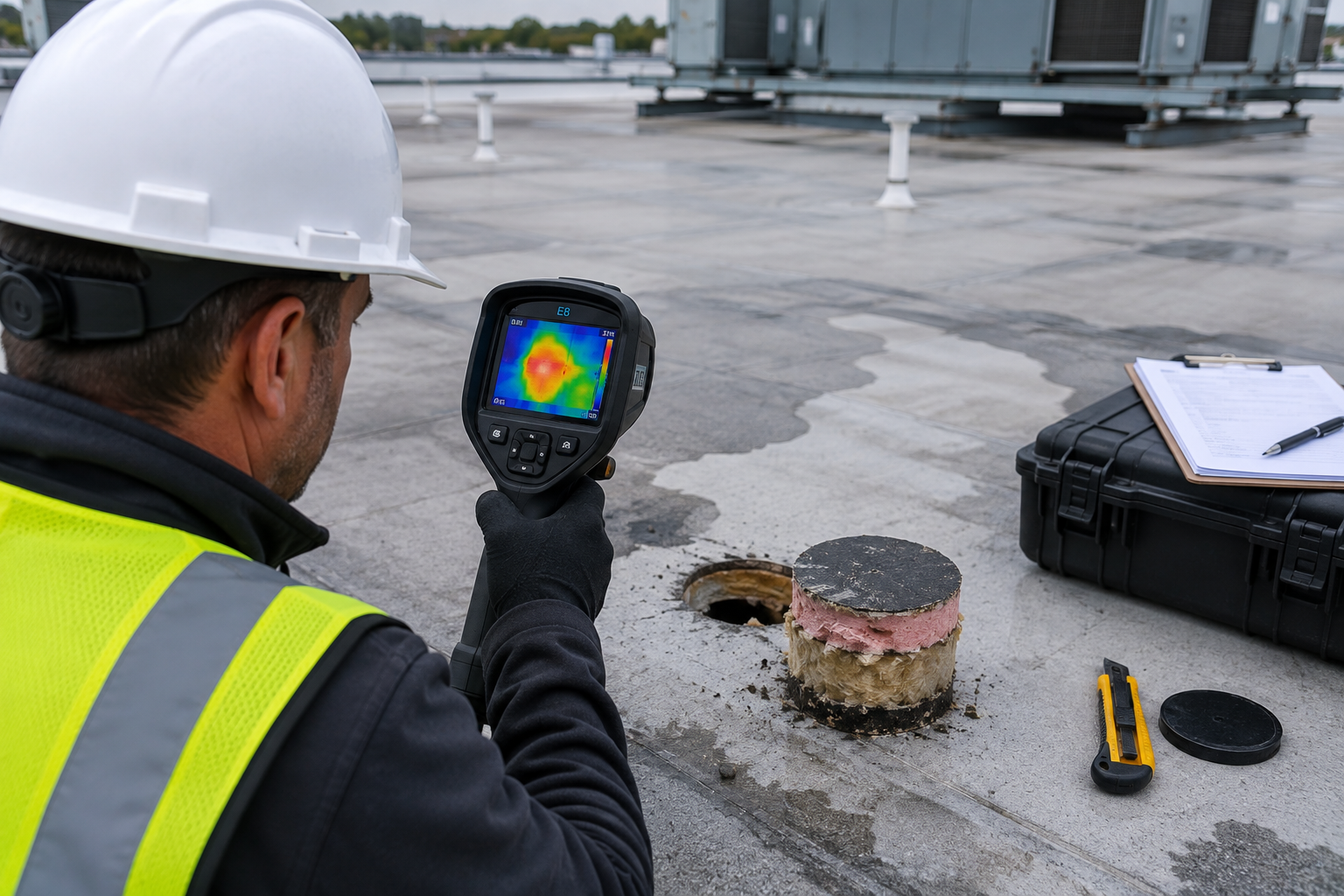
Infrared Moisture Scanning and Core Cuts
Thermal imaging finds wet insulation by the heat it holds after sunset, and core samples confirm what the scan suggests. Together they show precisely which sections are saturated, so replacement stays limited to the areas that genuinely need it.
Storm Claim Evidence Packages
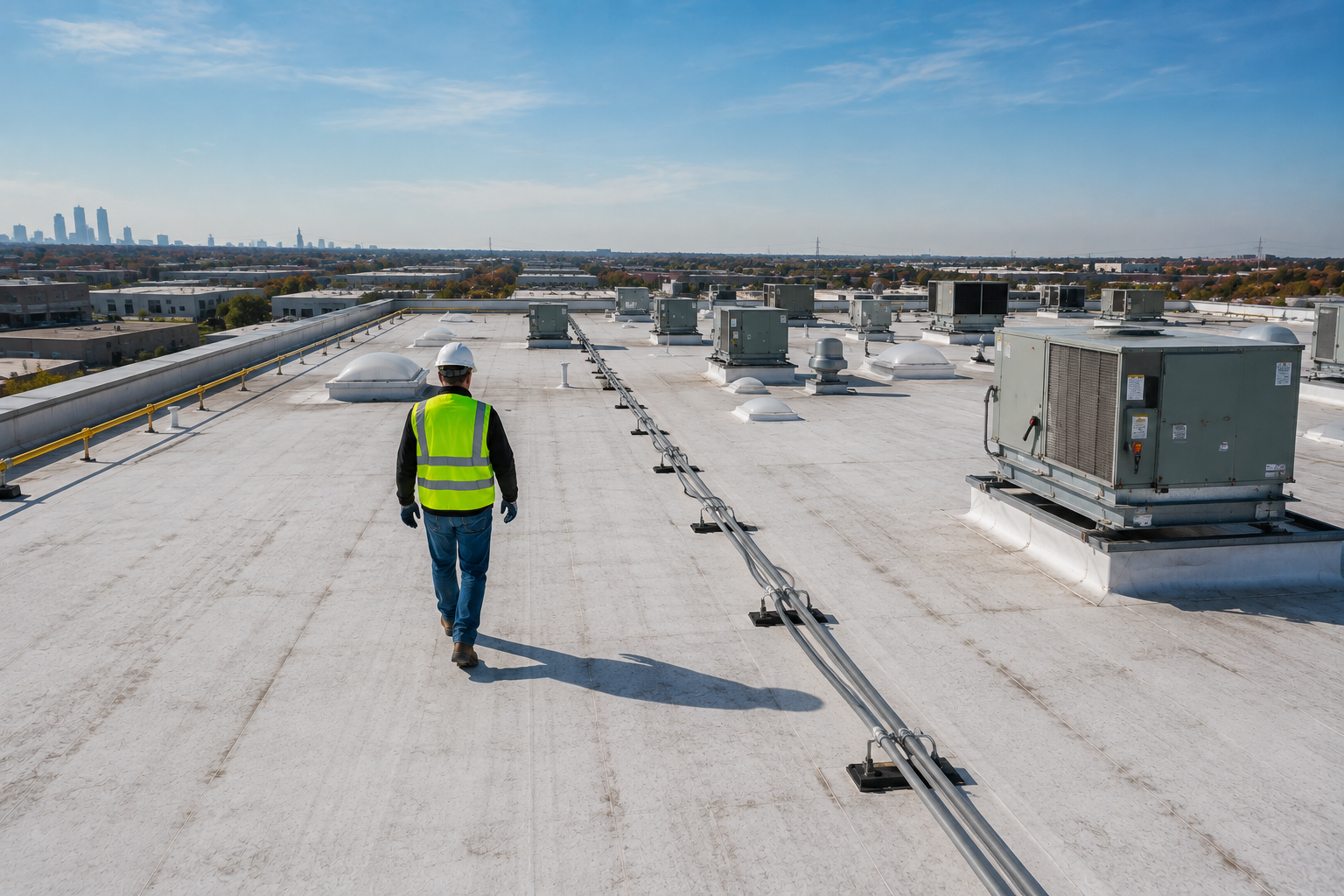
Claims succeed on evidence rather than argument. We assemble dated photographs, measurements, weather data, and a scope written in terms adjusters work with, then meet on the roof to walk the findings when a carrier schedules its visit.
Property Transaction Due Diligence
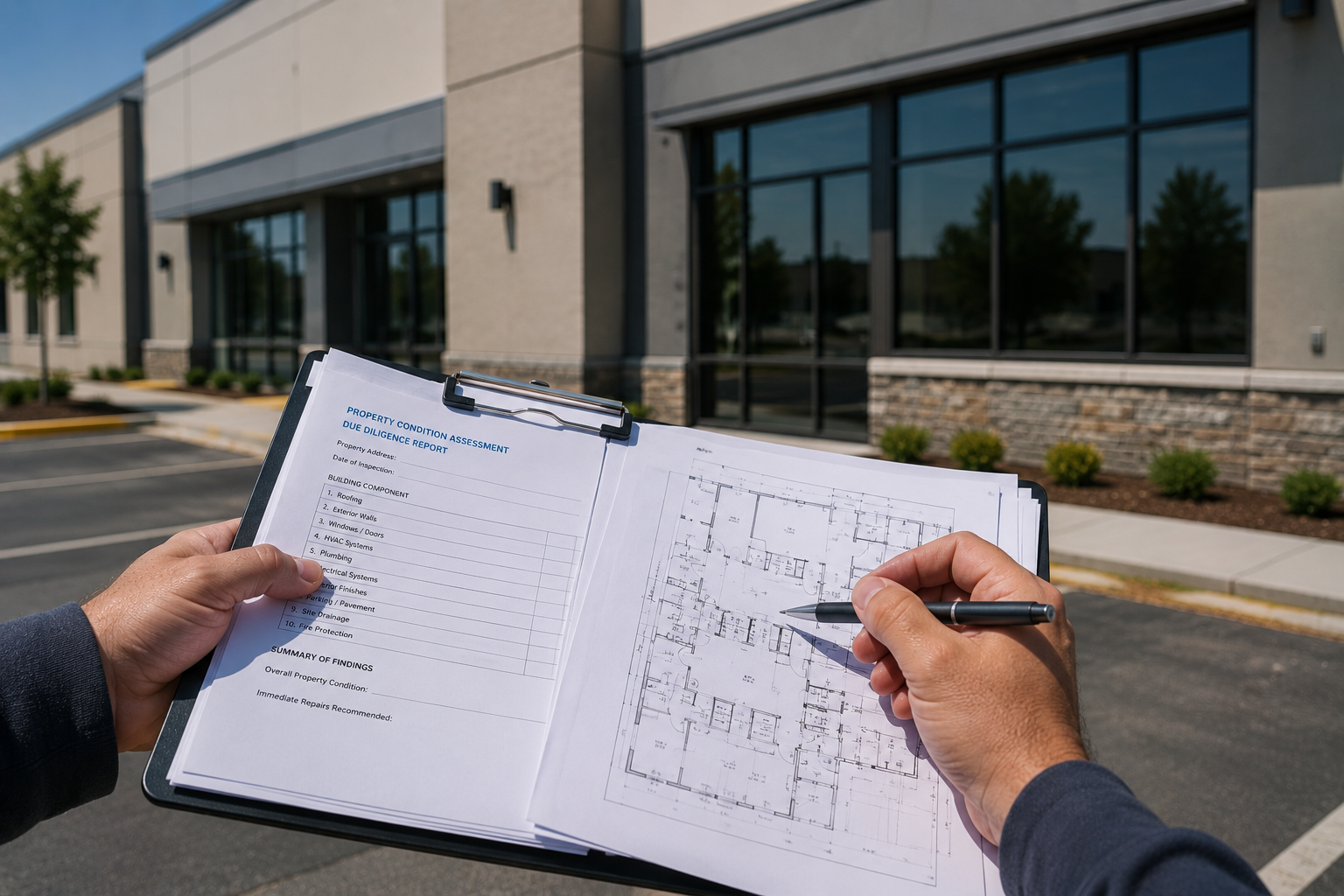
Buyers and lenders need to know what the roof will cost them well before the closing date. Our pre-purchase reports state remaining service life, immediate repair needs, and likely capital timing in plain language that supports a price negotiation.
Drone and Aerial Roof Imaging
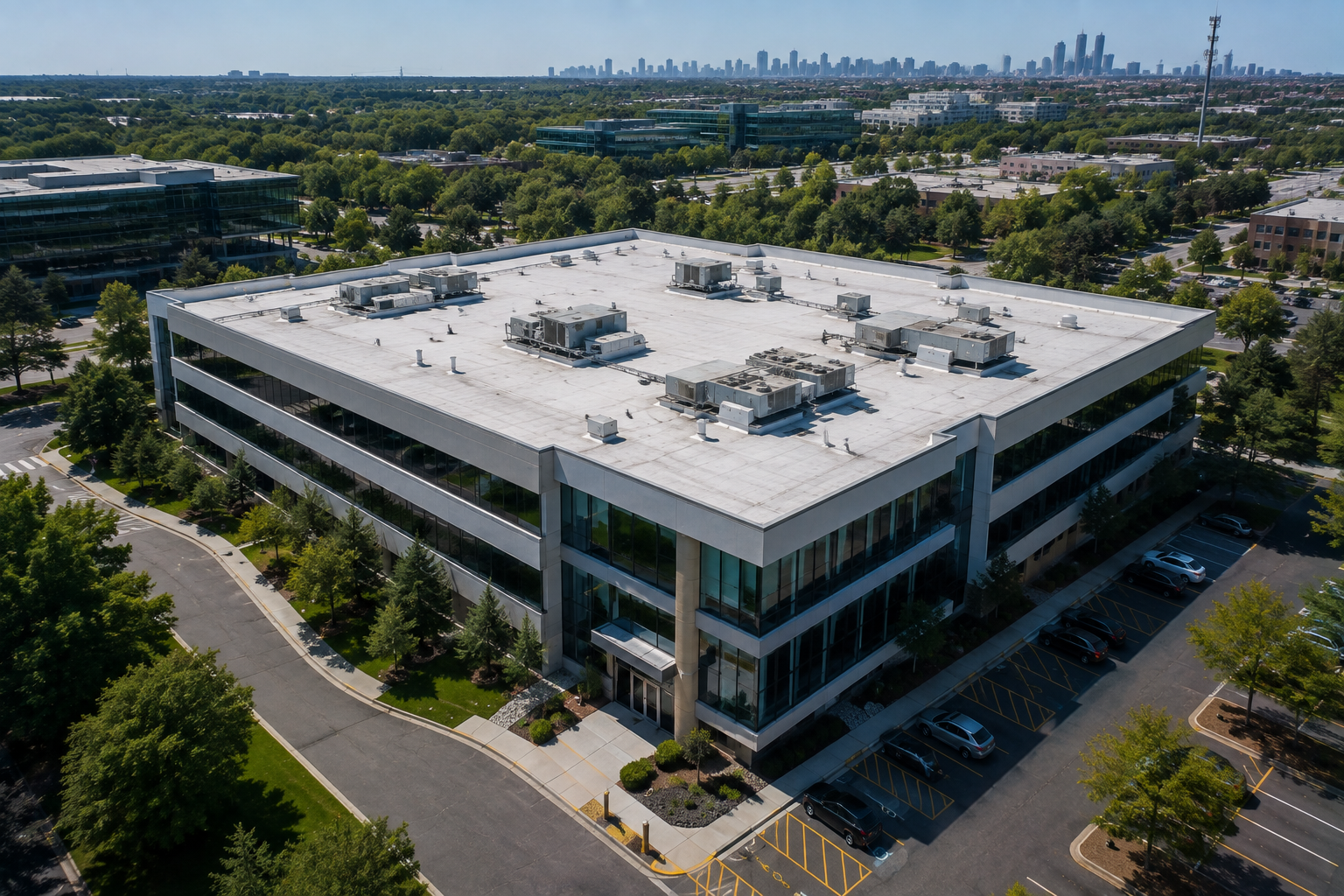
Steep slopes, fragile decks, and tall structures can all be documented safely from the air. High-resolution imagery captures the whole roof plane at once, giving a permanent visual baseline that later inspections can be measured against year after year.
How Inspections Support Smarter Roofing Decisions
Decisions Backed by Evidence
You approve work because a photograph and a moisture map justify it, not because someone said the roof looked tired. That shifts the conversation with ownership and finance away from personal opinion toward documented physical condition you can verify yourself.
Claims That Survive Scrutiny
Carriers challenge vague submissions and quietly pay the well-documented ones. Detailed imagery, careful measurements, and storm records gathered right after the event itself give your claim the substantiation it needs long before an adjuster ever begins asking questions.
A Repair List Ranked by Urgency
Not everything found on a roof has to be fixed during this quarter. Sorting the findings into immediate, near-term, and monitor categories lets you spend where it genuinely matters and safely defer the rest without lying awake about it.
Hidden Moisture Brought Into View
Wet insulation stays completely invisible until the deck rusts or a ceiling finally gives way. Scanning reveals saturation while it is still contained in one area, which usually means a partial replacement rather than tearing off the entire roof assembly.
Confidence Before You Sign
Purchasing a building with an unknown roof overhead is an expensive gamble to take. An independent assessment tells you what is coming and roughly when it arrives, which either protects the deal or gives you real, documented grounds to renegotiate.
A Baseline for Every Season Ahead
The first inspection becomes the fixed reference point for every one that follows it. Change is easy to spot against a documented starting condition on file, and slow deterioration stops hiding behind subjective memory and secondhand guesswork from previous years.
Welcome To Illinois Premier Roofing PLLC
Lorem ipsum dolor sit amet, consectetur adipiscing elit. Duis enim lectus, condimentum nec nibh in, egestas ultricies dui. Sed consectetur ligula urna, ac luctus nisi mattis at. Phasellus aliquam lectus sit amet nisl pretium, ac tempus nisl condimentum.
WHAT OUR CLEINT SAYS...
See what our customers have to say about their experience with Illinois Premier Roofing PLLC. We take pride in delivering quality workmanship, reliable service, and roofing solutions that earn the trust of homeowners and businesses alike.
New Title
Facts First, Then a Plan You Can Fund
An hour on the roof answers questions that years of guessing never will, and the answer is often better news than owners expect. Illinois Premier Roofing PLLC inspects commercial and residential roofs throughout Chicago, IL and the greater Chicago area with one rule: we report what we find, including the days when the honest recommendation is to do nothing yet. You get photographs, a condition rating, and a prioritized list you can take straight into a budget meeting. Nothing about that report obligates you to hire us for the work. Request an inspection through our contact page whenever it suits your schedule.
FREQUENTLY ASKED QUESTIONS
How long does a commercial roof inspection take?
Most inspections run between two and four hours, depending on total square footage, the number of rooftop units, and access arrangements. Infrared scanning adds a separate evening visit, since thermal contrast only develops once the surface begins cooling after sunset.
What is included in the inspection report?
Photographs keyed to a roof plan, a condition rating by area, documented deficiencies, and prioritized repair recommendations. Illinois Premier Roofing PLLC delivers written reports for commercial properties across Chicago, IL, generally within a few business days of the visit.
How soon after a hailstorm should the roof be inspected?
Within days if conditions are safe, because carriers apply strict filing deadlines and fresh damage is far easier to attribute. Waiting lets normal weathering blur the impact marks and weakens the connection between roof damage and one specific storm date.
Can hail damage exist without any leaking?
Yes, and that is easily the costliest misunderstanding in commercial roofing today. Impact bruises the membrane and fractures granules or protective coatings, shortening service life by several years while the roof stays perfectly watertight for another season or two.
When is infrared scanning worth doing?
Scanning earns its keep whenever wet insulation is suspected but the extent of it remains unknown, particularly before a coating, recover, or partial tear-off project. It reliably prevents paying to replace dry sections and prevents sealing saturated ones under new material.
How is your inspection different from the adjuster's visit?
Ours documents the entire roof independently and in technical detail, while an adjuster evaluates a claim against specific policy language. Holding an independent report first means the two assessments can be compared line by line and then reconciled quickly.
What do you need from us on inspection day?
Roof access, keys for hatches or ladders, and notice of any known leak locations inside the building. Illinois Premier Roofing PLLC coordinates arrival times with tenants and building staff at properties around Chicago, IL before every scheduled visit.
When does an inspection point toward replacement instead of repair?
Widespread saturation, deteriorated metal decking, or active failure across more than roughly a quarter of the roof field usually makes ongoing repair uneconomical. Isolated damage on an otherwise sound assembly almost always argues strongly for a targeted repair program.