Get It Fixed Fast - Leak-Free Guaranteed!
Commercial Roof Coating Services in Chicago, IL

What if the roof over your building does not need to come off at all? Plenty of commercial membranes across the Chicago area begin leaking while the deck, insulation, and structure below them remain perfectly sound. Illinois Premier Roofing PLLC installs commercial roof coatings that seal those aging surfaces, restore watertight performance, and reflect solar heat away from the building. We apply fluid-applied restoration systems on flat and low-slope roofs throughout Chicago, Illinois, and the surrounding Chicagoland counties.
Every coating project starts with the substrate rather than the sales sheet. We measure moisture, evaluate seams and penetrations, and confirm the assembly can carry a liquid system before recommending one. With 17 years of commercial roofing behind our crews and three generations of trade knowledge guiding the work, we install silicone, acrylic, and elastomeric products to manufacturer specification so warranty coverage holds. Request a coating evaluation through our contact page.
Roof Coatings We Apply
We match each coating system to the membrane below it, the drainage above it, and how the building actually runs.
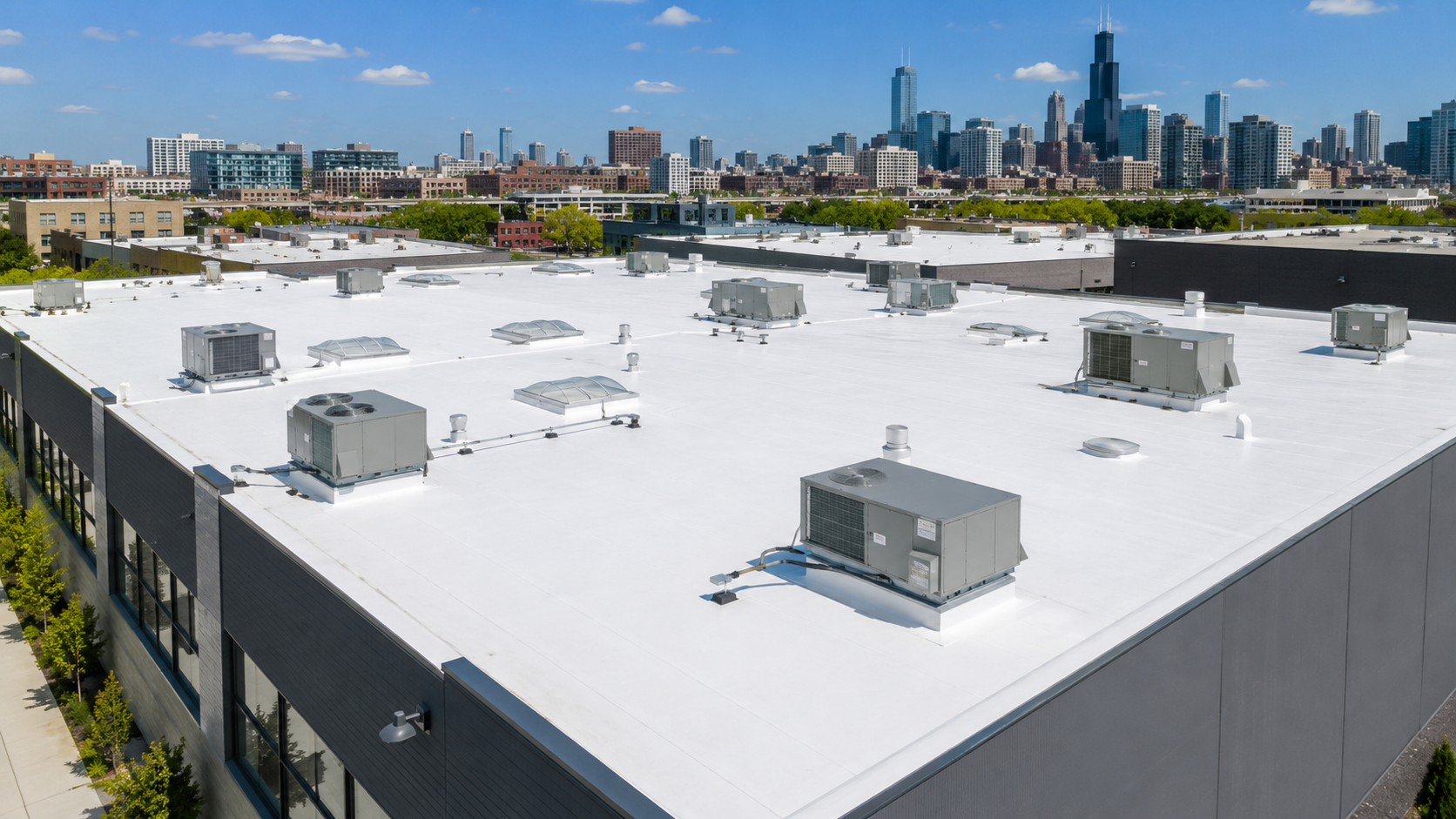
Silicone Roof Coating Systems
Silicone handles standing water better than most chemistries, which matters on low-slope decks with slow drainage. Applied at the right mil thickness over a properly cleaned surface, it forms a monolithic membrane with no seams for water to find and exploit.
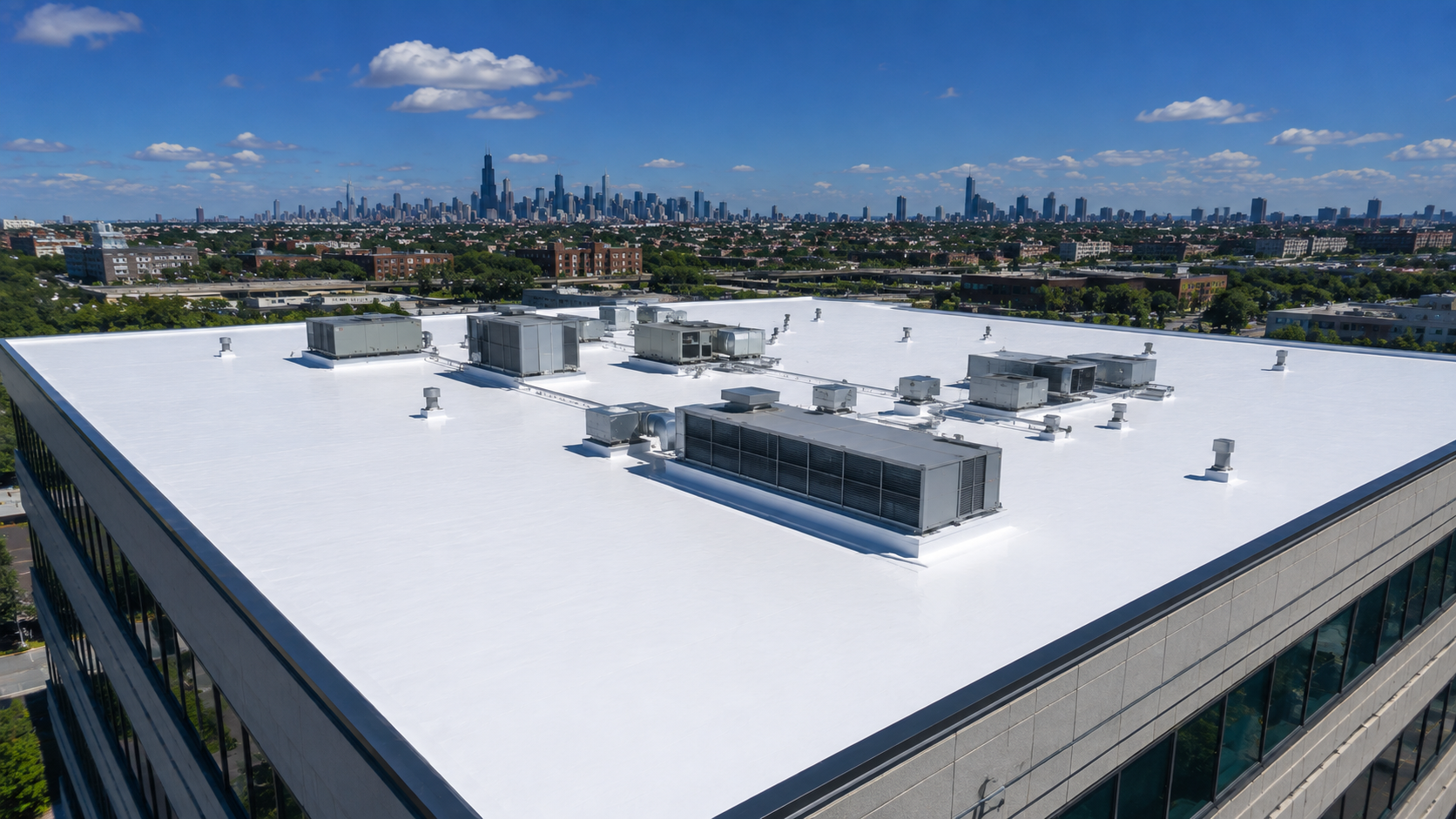
Acrylic Reflective Coating Systems
Water-based acrylics deliver strong reflectivity at a lower material cost and cure into a tough, breathable film. They suit buildings with positive drainage and give aging membranes a bright surface that pushes summer heat back into the sky rather than the ceiling.
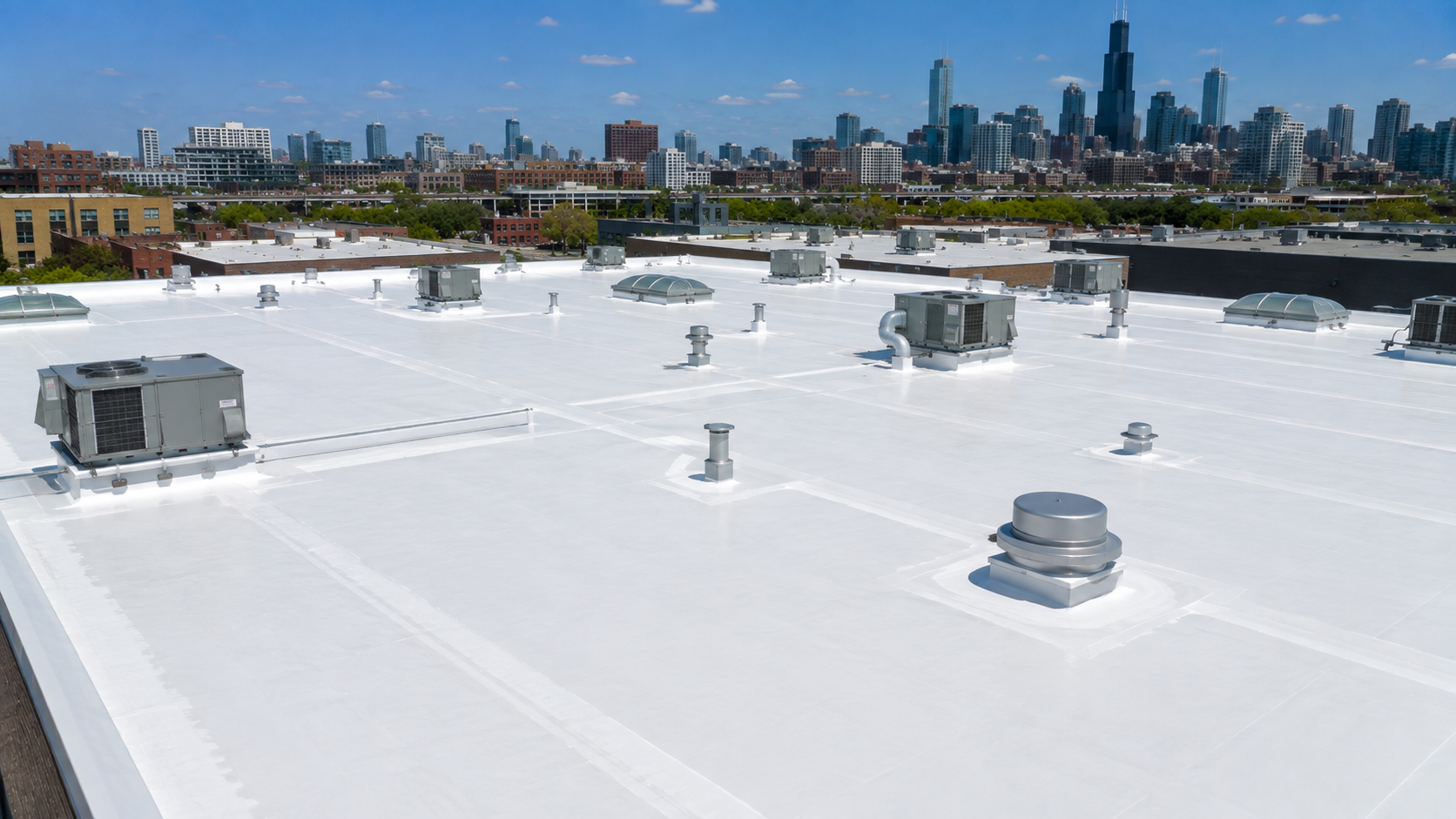
Seam and Penetration Reinforcement
Failure almost always begins where the roof is interrupted. We embed reinforcing fabric at laps, curbs, drains, pipe boots, and equipment supports, building extra thickness exactly where movement and thermal cycling put the most stress on a coating system.
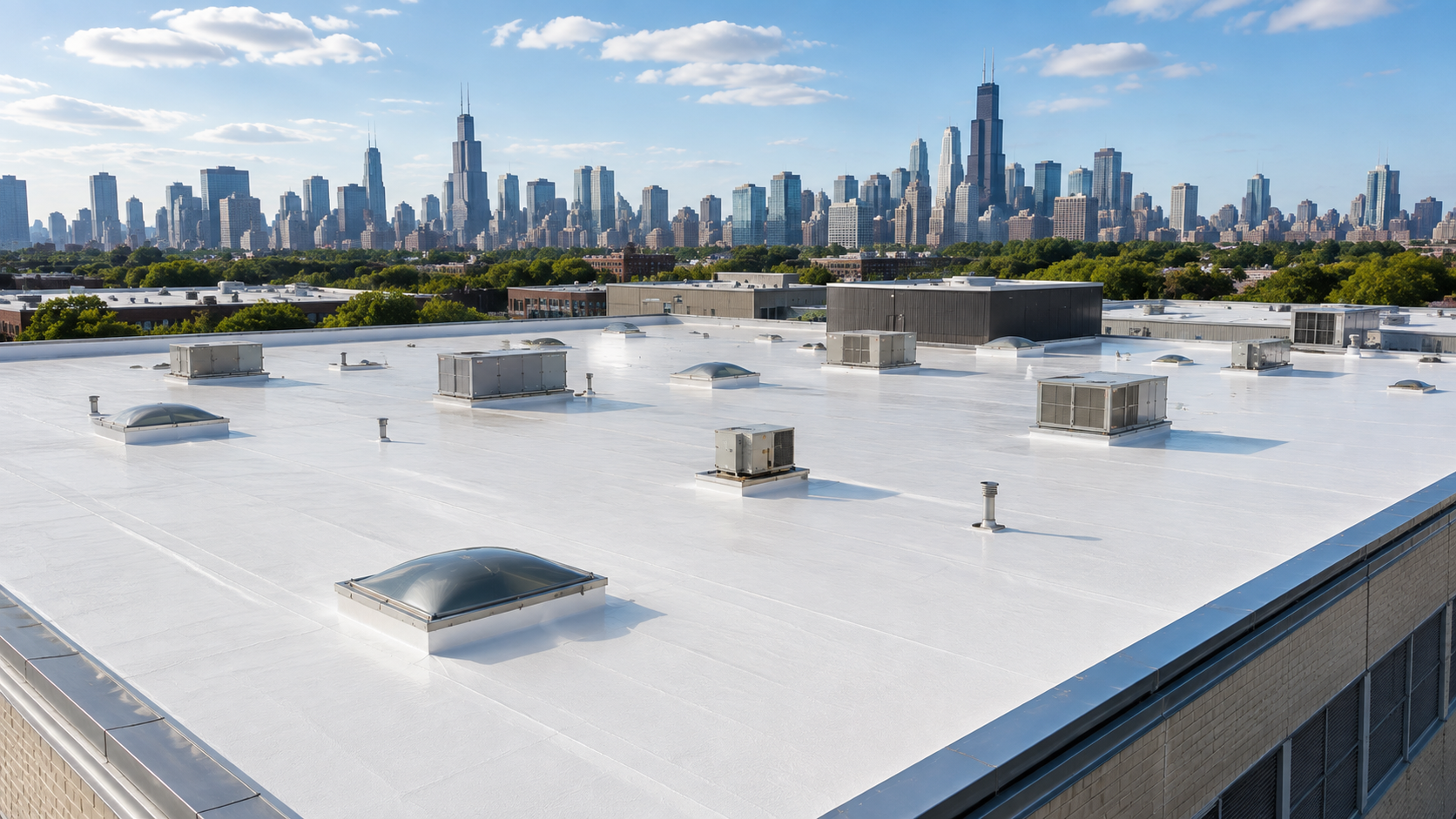
Ponding Water Correction
Water that sits for days accelerates every kind of deterioration underneath it. Before coating, we address low spots with tapered insulation or sloped fill and confirm drains and scuppers move volume correctly, so the finished surface sheds instead of holding.
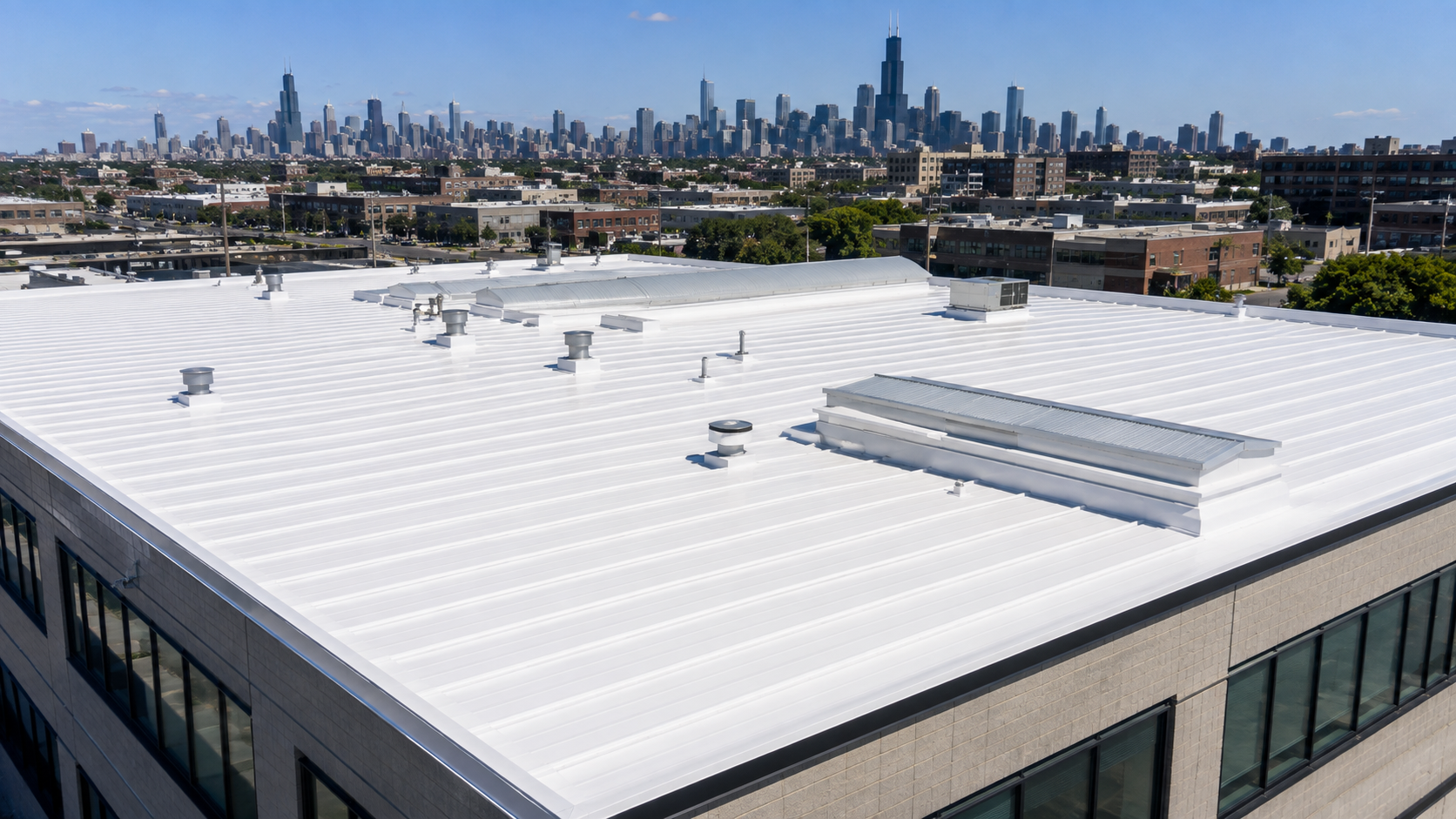
Metal Roof Coating and Rust Treatment
Corroded panels and loose fasteners let moisture travel along seams unseen. We treat rust, replace failed fasteners, seal the ribs and laps, then encapsulate the panels in a flexible coating that moves with the metal through wide temperature swings.
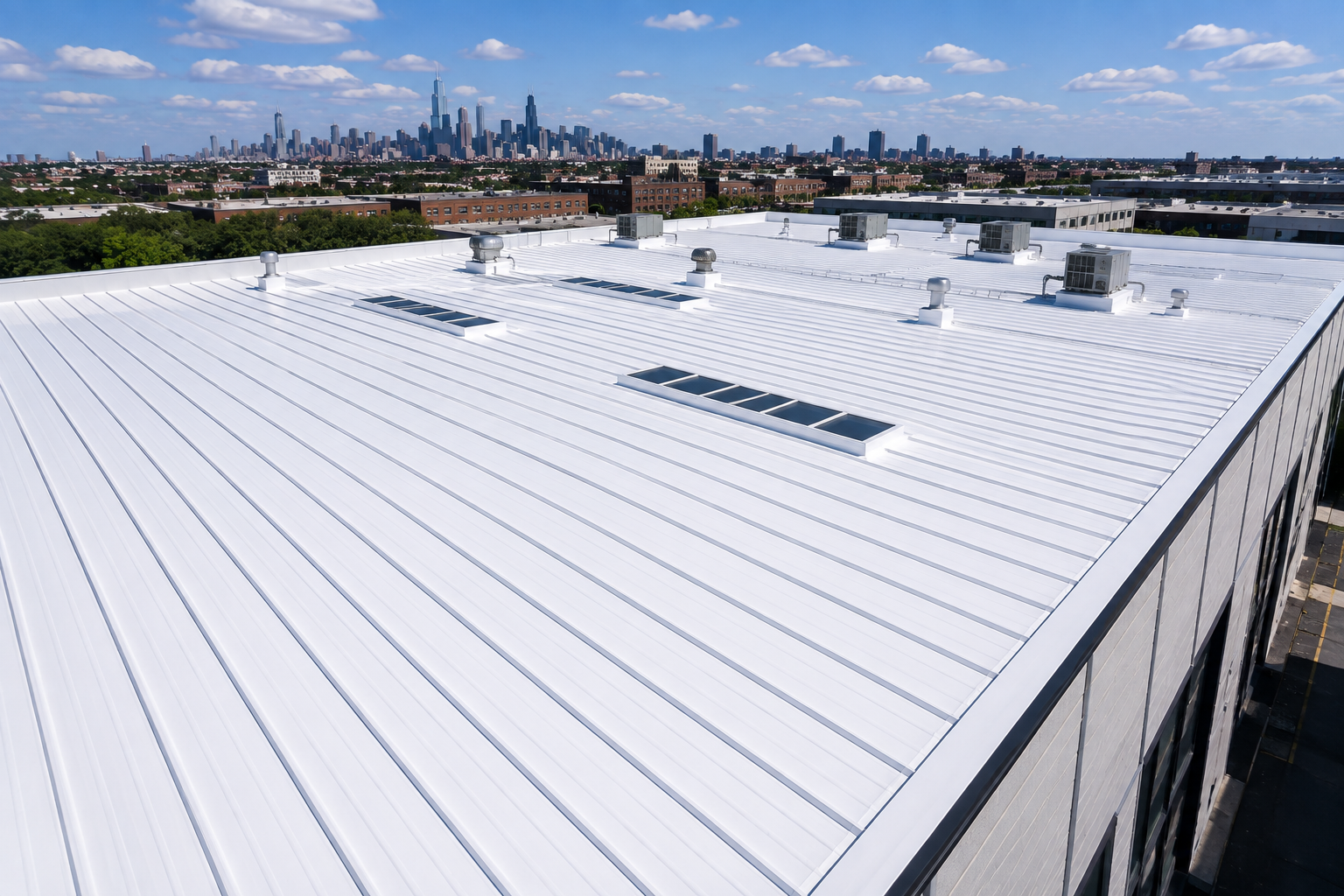
Coating Maintenance and Recoat Programs
A coated roof stays warrantable when someone actually looks at it. We schedule periodic inspections, clean the surface, repair mechanical damage, and apply a fresh topcoat at the interval the manufacturer requires to keep coverage active and performance steady.
How Coatings Improve Protection and Energy Efficiency
Years Added to a Roof You Already Own
Restoring a sound membrane defers the disruption and expense of a full replacement. You keep the existing assembly working, gain a renewed watertight surface, and push the next major roofing decision well down the road instead of facing it now.
Lower Summer Cooling Loads
A bright reflective surface sends solar energy back rather than absorbing it into the building. Interior temperatures stabilize, rooftop units cycle less often through July and August, and the membrane itself runs cooler, which slows the aging process considerably.
Work That Happens Around Your Schedule
Coating application needs no tear-off, no debris chutes, and no dumpsters parked in the loading zone. Crews work in sections above you while shipping continues, tenants stay put, and daily operations carry on with minimal noise or interruption.
Less Material Sent to Landfill
Removing an old membrane generates tons of waste that has to go somewhere. Restoration keeps the existing materials in service, cuts hauling entirely, and gives sustainability reporting a genuine result rather than a rounding error on the annual summary.
Renewable Manufacturer Warranties
Approved systems carry warranties that can be renewed with a recoat when the term expires. That turns a one-time purchase into a repeatable cycle, letting a single roof deck serve the building far longer than its original membrane ever would.
Predictable Capital Planning
Restoration usually falls into an operating budget rather than a capital request. Finance teams gain a smaller, plannable expense with a known service interval, which makes forecasting easier and removes the surprise of an emergency replacement mid-year.

WHAT OUR CLEINT SAYS...
See what our customers have to say about their experience with Illinois Premier Roofing PLLC. We take pride in delivering quality workmanship, reliable service, and roofing solutions that earn the trust of homeowners and businesses alike.
New Title
Get More Life Out of the Roof Overhead
A membrane that still has good bones deserves a second act rather than a dumpster, and that is what a well-specified coating delivers for buildings across the greater Chicago area. Illinois Premier Roofing PLLC treats restoration as an engineering decision, not a default recommendation, which is why some buildings get a coating proposal from us and others get honest advice to plan for replacement instead. If your roof is aging but not failing, a survey now gives you options while they still exist. Send us the details through our contact page and we will schedule an evaluation.
FREQUENTLY ASKED QUESTIONS
How long does a silicone roof coating last?
A properly specified silicone system generally performs for 10 to 20 years, depending on mil thickness, surface preparation, foot traffic, and drainage. Manufacturers tie warranty length to applied thickness, so the specification written up front largely determines the service life.
Can a coating be applied over an existing TPO or EPDM membrane?
Yes, provided the membrane is adhered, dry, and free of widespread splits. Each substrate needs its own preparation, including cleaning, priming, and seam reinforcement, because adhesion behaves quite differently on thermoplastic sheets than it does on cured rubber ones.
What weather conditions are needed to apply a roof coating?
Application windows depend on surface temperature, humidity, and dew point rather than the calendar alone. Most systems need dry conditions above roughly 50 degrees with no rain forecast during cure, which shapes scheduling considerably in the Illinois shoulder seasons.
Will a coating stop a leak that is already active?
Only after the source is repaired. Coating over an active leak traps moisture in the insulation, where it spreads laterally and damages the deck. We locate and repair the entry point, replace saturated insulation, then coat the corrected assembly.
How do you know whether the insulation under the membrane is wet?
Infrared scanning, core cuts, and moisture meter readings reveal saturation that no surface inspection can. Wet areas are mapped and removed before restoration, because sealing water inside an assembly guarantees the coating fails long before its rated term.
Does a coated roof still need maintenance?
It does. Drains clog, service technicians drop tools, and equipment vibration works on flashings regardless of the surface above them. Illinois Premier Roofing PLLC inspects coated roofs across Chicago, IL twice yearly to keep both the film and its warranty current.
What is the difference between silicone and acrylic coatings for Illinois buildings?
Silicone resists ponding water and ultraviolet exposure without chalking, making it the safer pick on slow-draining decks. Acrylic costs less, breathes well, and reflects strongly, but it needs positive drainage because prolonged standing water gradually softens the film.
How does Illinois Premier Roofing decide whether restoration is realistic?
Illinois Premier Roofing PLLC surveys the whole assembly, including moisture content, seam integrity, fastener condition, and drainage, before advising anything. Buildings around Chicago, IL get a straight answer, and 17 years of local work tells us when replacement is the sounder path.