Get It Fixed Fast - Leak-Free Guaranteed!
Commercial Roof Overlay Services in Chicago, IL

Building code allows a second roof system above the original, and that single allowance saves commercial property owners weeks of disruption every year. Illinois Premier Roofing PLLC designs and installs recover and overlay assemblies that place new insulation, cover board, and membrane directly over a sound existing roof. We build these systems on flat and low-slope commercial properties across Chicago, Illinois, and the surrounding Chicagoland counties.
The allowance only helps when the roof below actually qualifies for it. We verify how many layers already exist, test for trapped moisture, review structural capacity, and calculate wind uplift requirements before the first fastener goes in. Our licensed, bonded, and insured crews bring 17 years of commercial experience and three generations of trade practice to the detailing. Tenant access, staging areas, and cold-weather scheduling all get settled before the crew arrives. Request an overlay assessment through our contact page.
Commercial Roof Overlays We Install
An overlay only works when the layers underneath cooperate, so we carefully verify every condition listed below before recommending one.
Existing Roof Evaluation and Code Review
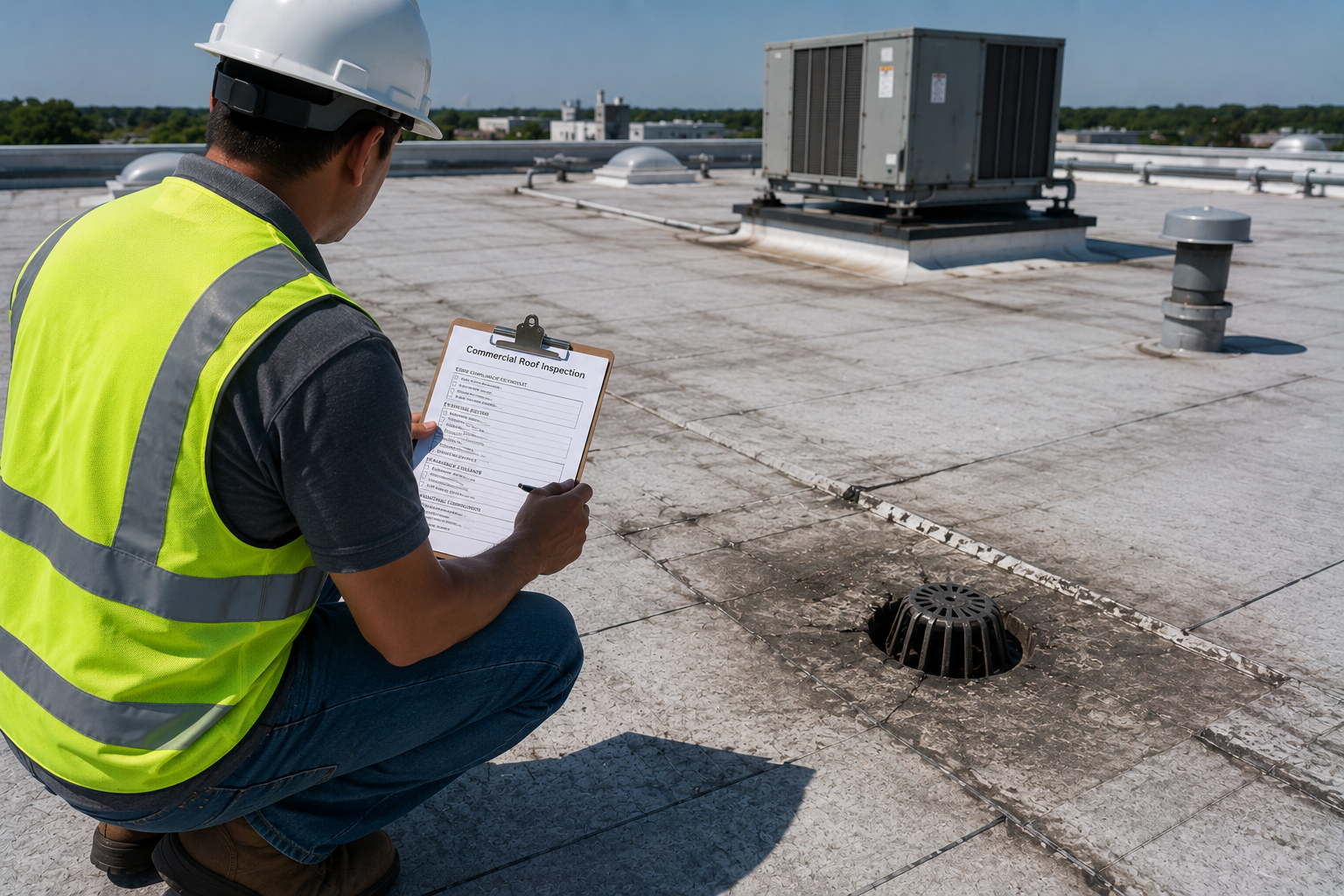
Most jurisdictions permit only one recover over an original roof, so the first question is what is already up there. We verify layer count, check moisture content, and review structural drawings before confirming an overlay is legally and physically viable.
TPO and PVC Recover Membranes
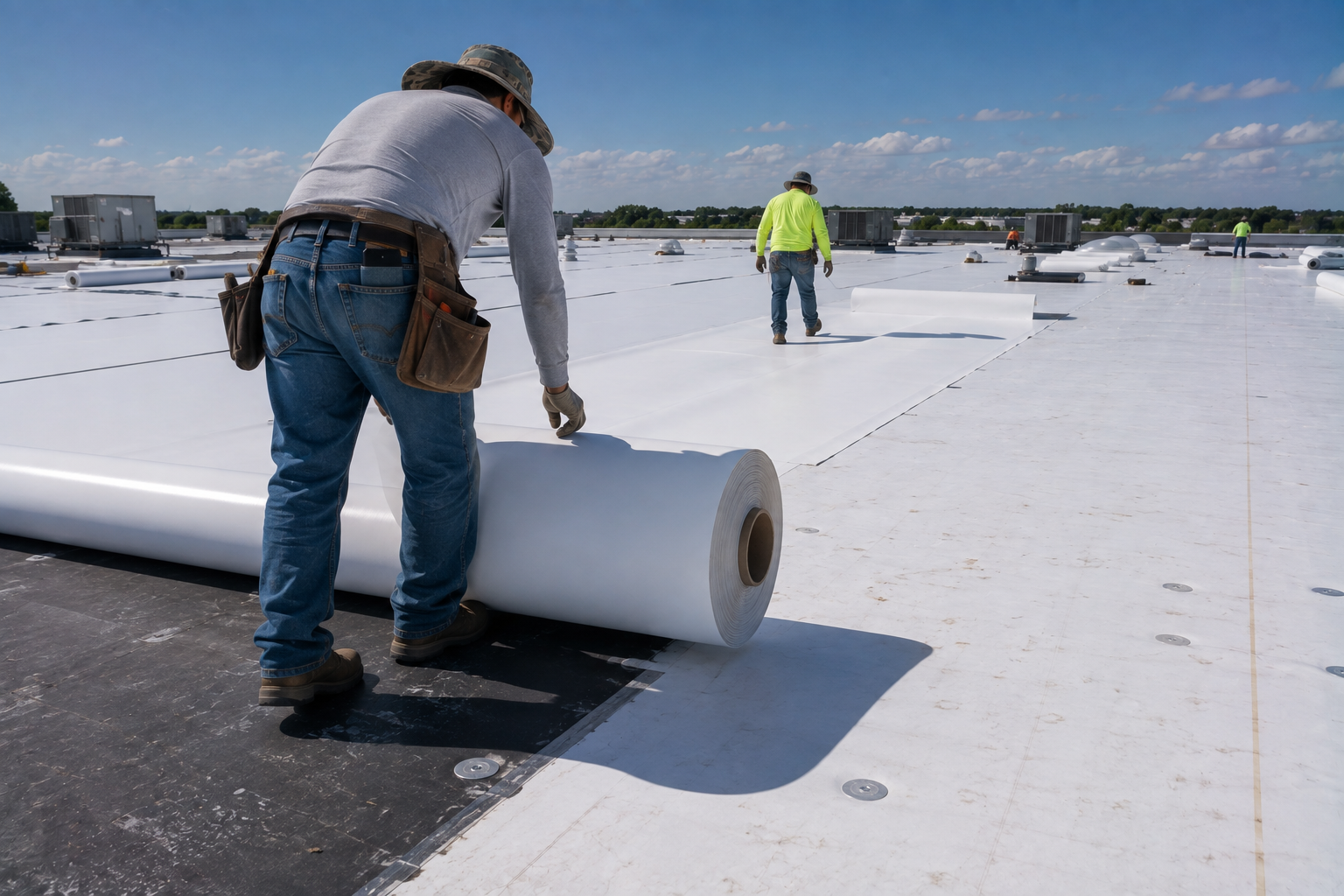
Single-ply sheets install quickly over a prepared substrate and weld into a continuous watertight surface. Thermoplastic membranes suit recover work because they stay light, reflect solar heat, and detail cleanly around the curbs and penetrations already present on an occupied building.
Cover Board and Separation Layers
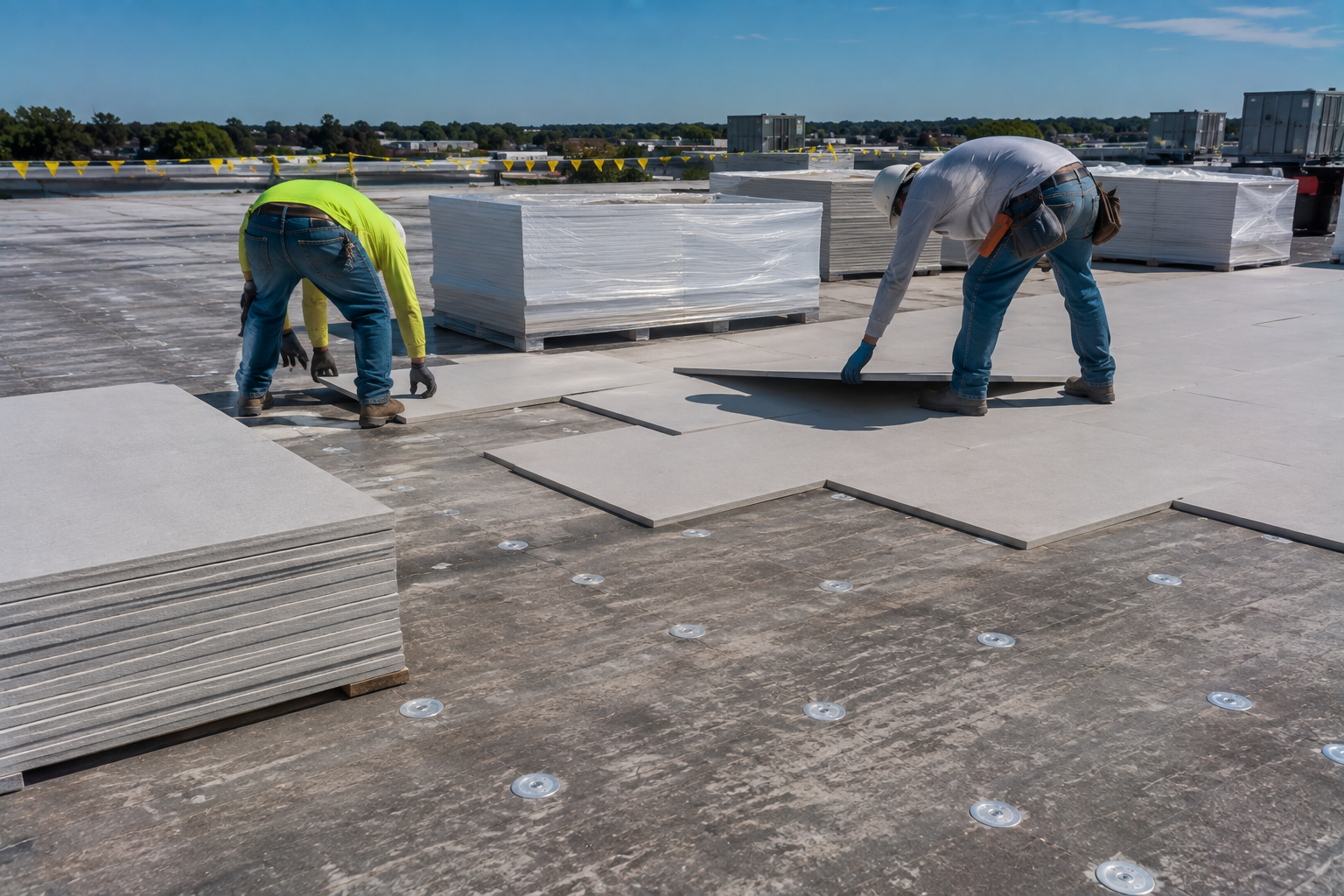
A rigid board between old and new keeps the two systems from working against each other. High-density polyiso or gypsum boards level out irregularities, add puncture resistance, and give the new membrane a clean, uniform plane to bond or fasten to.
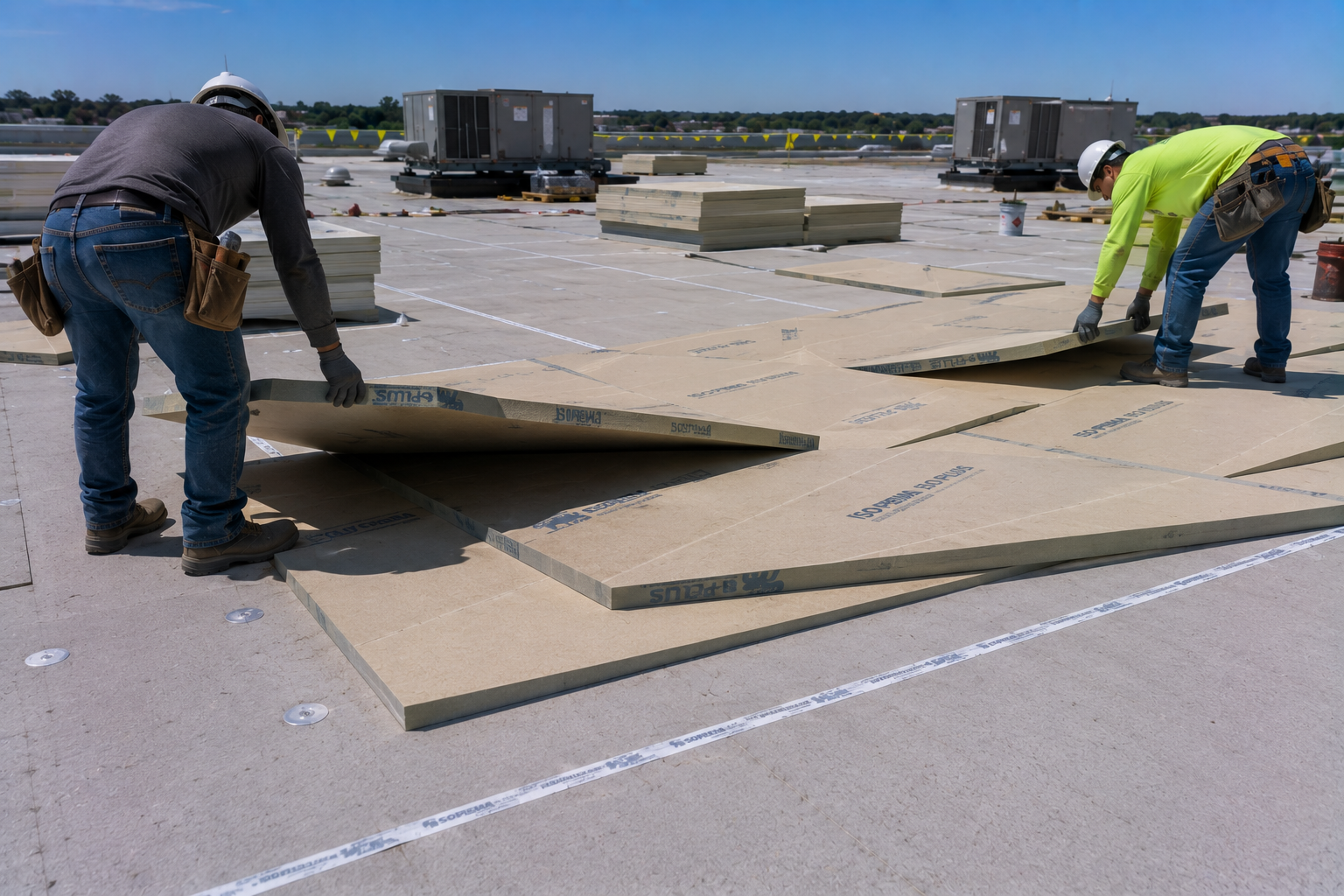
Insulation Upgrades and Tapered Recover
Adding rigid insulation during a recover is the least expensive chance a building gets to reach current energy code. We calculate the R-value shortfall, layer boards with staggered joints, and taper the fill where drainage needs correcting at the same time.
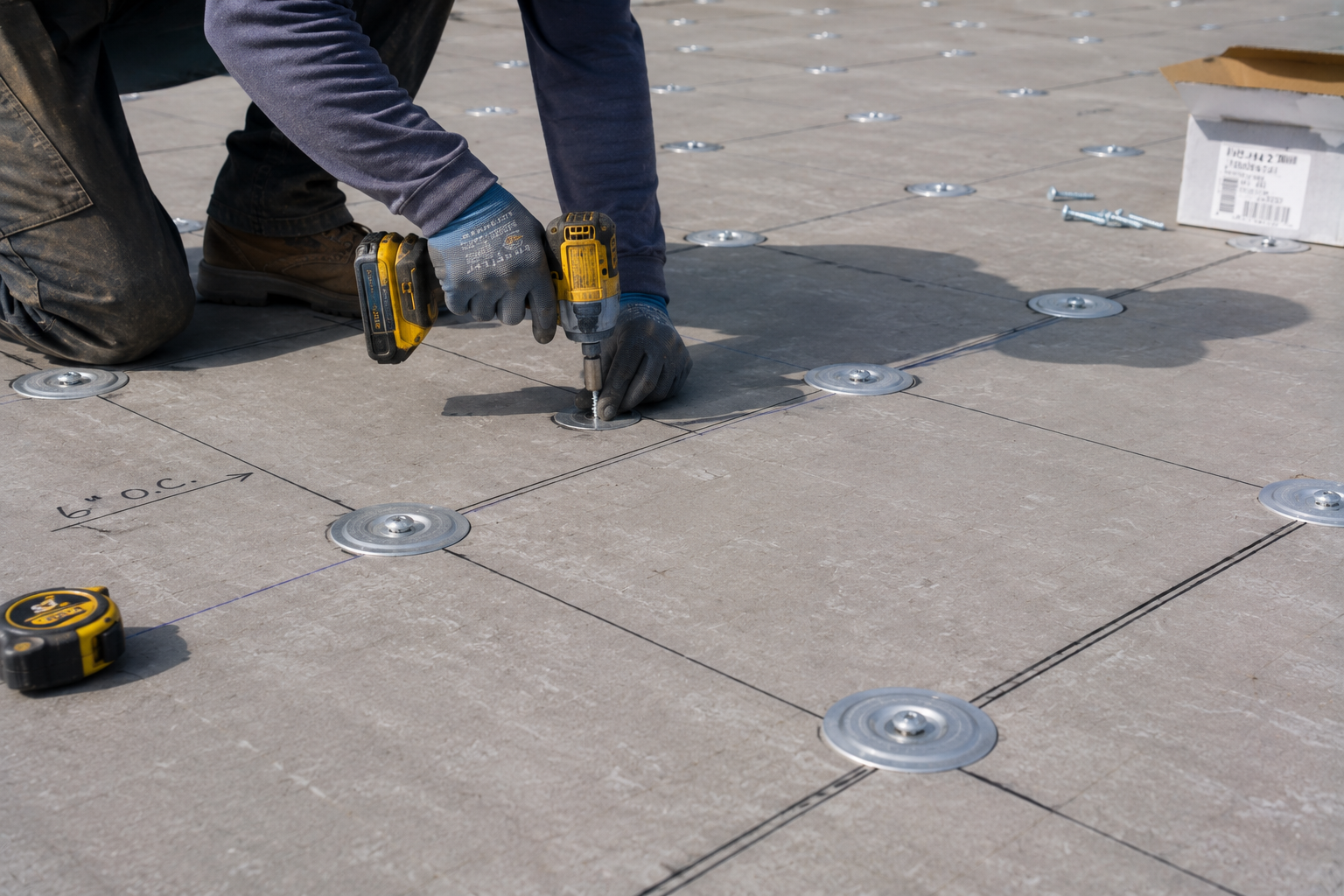
Wind Uplift Design and Attachment
Fastening patterns are engineered rather than guessed, particularly on buildings exposed to open ground and lake-effect wind. Our team calculates uplift zones, increases fastener density at corners and perimeters, and selects lengths that reach sound structural deck beneath both roof systems.
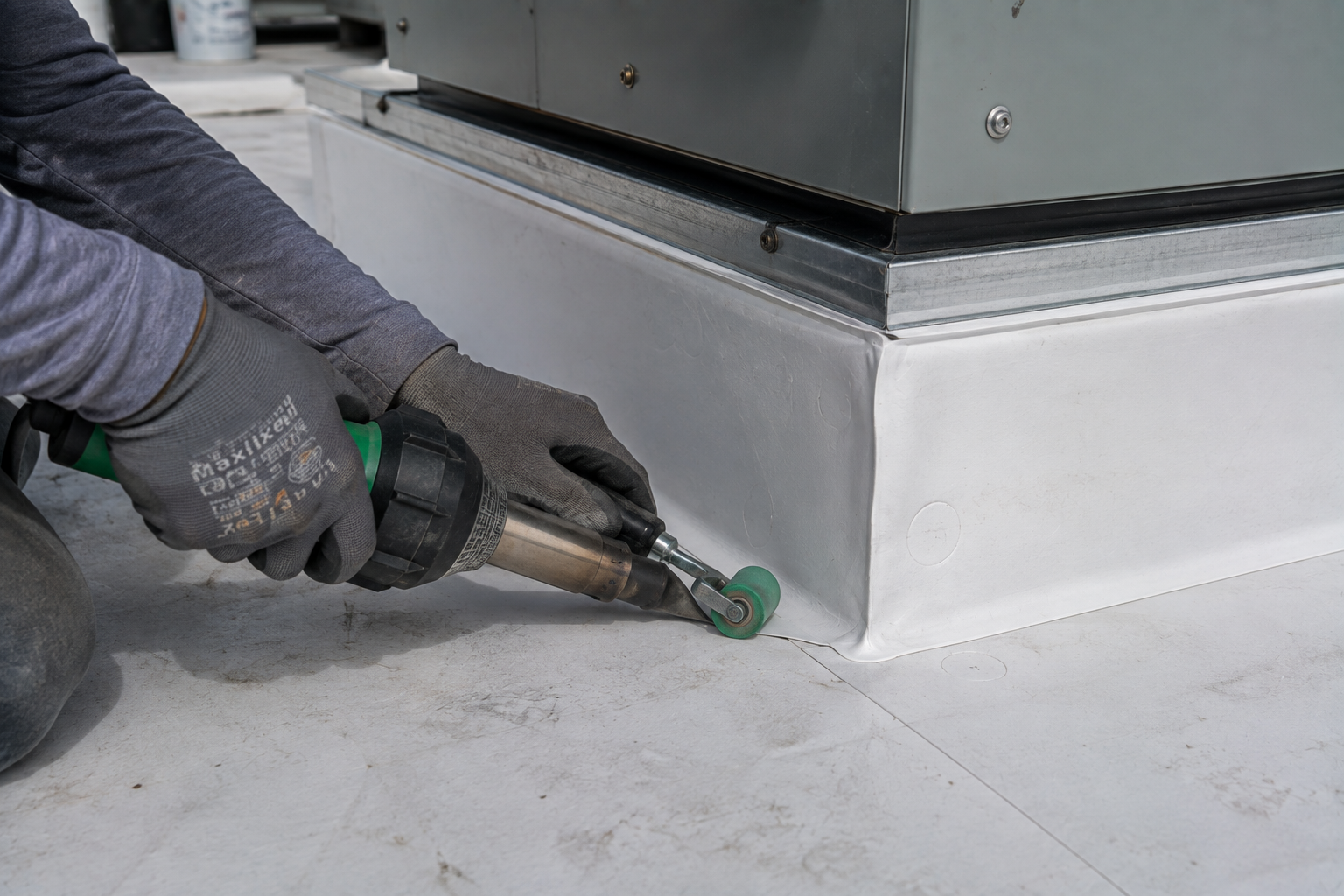
Curb, Drain, and Perimeter Transitions
Raising the roof plane changes every height on it. Curbs get extensions, drains receive retrofit bowls or sumps, edge metal is replaced to suit the new thickness, and door thresholds are checked so rooftop clearances still meet code.
Why Overlays Offer a Practical Roofing Upgrade
A New Roof Without an Empty Building
You keep tenants, inventory, and production lines in place while the work happens above them. Deliveries continue, parking stays open, and nobody schedules a shutdown, because the crew never opens a path into the occupied space below the deck.
Weeks Removed From the Project Schedule
Skipping demolition takes one of the slowest phases out of the calendar entirely. Crews move straight to installation, the job finishes sooner, and your building spends far less time hosting equipment, dumpsters, and the traffic that comes with them.
Insulation Brought Up to Current Code
Thicker board goes down during a recover, a rare chance to fix thermal performance without touching the interior. Heating and cooling equipment runs against a properly insulated envelope, and utility spend drops in a way that shows up on monthly statements.
Dry Interiors Through Every Phase
Nothing gets opened to the sky overnight, so a surprise storm cannot reach your ceilings, stock, or equipment. That matters most for cold storage, data rooms, pharmacies, and any tenant whose lease makes water intrusion an expensive conversation.
Fewer Unknowns Once Work Begins
Because the original roof stays put, there is no hidden deck condition waiting to blow up the schedule midway through. The scope you approve at the start is very close to the scope that gets built and invoiced.
Capital Spent on Roofing, Not Demolition
Tear-off, hauling, and landfill fees consume a real share of any replacement budget. Directing that money into thicker insulation or a heavier membrane instead means more of your investment stays on the building rather than leaving in a truck.
WHAT OUR CLEINT SAYS...
See what our customers have to say about their experience with Illinois Premier Roofing PLLC. We take pride in delivering quality workmanship, reliable service, and roofing solutions that earn the trust of homeowners and businesses alike.
New Title
The Option Between Patching and Starting Over
Somewhere between patching an aging membrane and gutting it down to the deck sits an option many owners never get presented. Illinois Premier Roofing PLLC walks the roof, cores it, checks the layer count against the code, and tells you plainly whether a recover is available to your building across the Chicago area. There is no pressure attached to that answer, and a survey costs you nothing but an hour of roof access. If your membrane is tired but your deck is solid, this is the conversation worth having first. Reach us through our contact page to get it started.
FREQUENTLY ASKED QUESTIONS
When is an overlay a better choice than a full tear-off?
Overlays make sense when the existing roof is dry, structurally sound, and carries only one layer. Once moisture has spread through the insulation or a second system is already present, code and performance both point toward complete removal.
How many roof layers does building code allow?
Two total systems are the common limit, meaning one recover over an original roof. Local amendments vary, so we confirm the count with core cuts and permit records rather than assuming what previous contractors left behind up there.
Can an overlay go over a roof with wet insulation?
No. Trapped moisture would sit permanently between two systems, corroding the deck and destroying thermal value, so saturated areas are located by infrared scan and core cuts, removed entirely, and replaced with dry board before any recover work proceeds.
How is a recover different from a roof restoration?
Recover installs an entirely new membrane and insulation above the old assembly, while restoration renews the existing surface in place. The first adds material and thickness; the second works with what is already there and corrects its weak points.
Will the added weight be a problem for the structure?
Rarely, though it always gets verified. A recover assembly typically adds only a few pounds per square foot, and we compare that against the original structural drawings or an engineer's review before specifying insulation thickness, board density, and membrane type.
What happens to rooftop units, curbs, and drains during an overlay?
Every penetration rises with the new roof plane. Illinois Premier Roofing PLLC extends curbs, retrofits drain bowls, and reworks equipment supports on buildings around Chicago, IL so nothing ends up sitting below the finished surface where water can collect afterward.
Can an overlay be completed before winter shuts the season down?
Yes, given a reasonable start date. Thermoplastic welding and mechanical attachment tolerate cooler temperatures better than adhered systems, and because no tear-off is involved, the roof is never left vulnerable if weather forces a pause mid-project.
What warranty comes with an overlay system?
Manufacturers issue full system warranties on approved recover assemblies, commonly 15 to 30 years depending on membrane thickness. Illinois Premier Roofing PLLC installs to those specifications across Chicago, IL and registers the coverage once the field inspection clears.